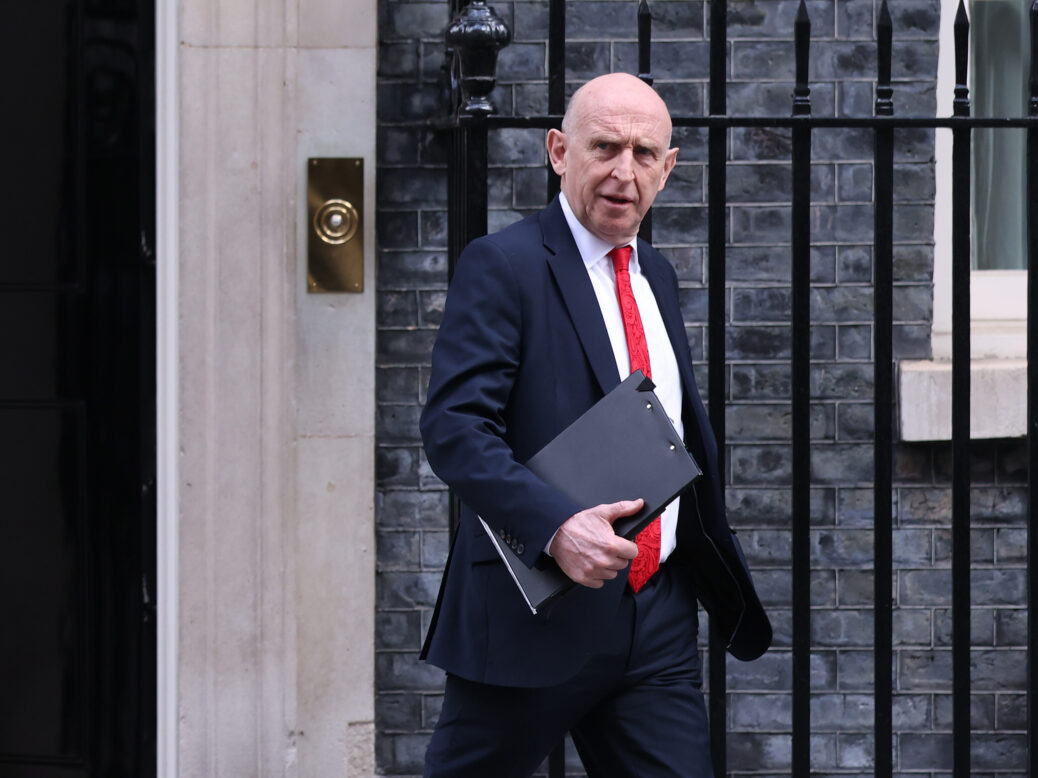
The resignation of John Healey as Keir Starmer’s defence secretary is the latest blow to the Prime Minister’s ailing government. It could also be the most damaging.
In a letter to Starmer, which he published on X shortly after midday, Healey quit the government. His words contain a damning indictment not only of the Prime Minister, but of the Chancellor too. Healey had been given an early sighting of the long-awaited Defence Investment Plan (the blueprint for how the Ministry of Defence will set out its budget over the next decade) and found it woefully deficient. He described the Prime Minister as “unable” and the Treasury as “unwilling” to commit the “resources that the nation needs at this time of rising threat”.
Labour MPs are reeling from the news. But no one I spoke to was surprised about Healey’s departure. Shortly after his letter was published, one Labour source messaged: “I mean obviously he was already done. But this is massive.” Many MPs questioned how a defence secretary, whose job it is to understand the weaknesses of the UK’s defence capabilities and the threats that we face, could be expected to stick his fingers in his ears and wave through such a minor increase. One MP described Healey’s resignation as “a principled stand”; another said he would be a “huge loss to government.” Luke Charters, the MP for York Outer, described Healey as a “true Yorkshireman” but added that his decision to resign says a lot about “the incrementalism and managerialism in No 10.” Charters said it reflected what he saw as a “culture of timidity within government” and “a failure to match the moment”.
Indications of this crisis have been emerging for some time. In April, the former Labour defence secretary, George Robertson, called out Starmer and Reeves’ “corrosive complacency” on defence spending – marking the most significant intervention on the subject since the Cold War. It appears he was ignored.
Starmer’s critics are already rushing for another go at sticking the knife in. One MP said shortly after Healey’s resignation: “This has reminded everyone that Starmer’s leadership isn’t sustainable”. Meanwhile another Labour source pointed out that the Prime Minister’s “only remaining arguments were stability” while the government as a whole has “started to base its identity around ‘security’”. Healey’s resignation pours cold water over those assertions.
The search is now on for Healey’s replacement. Al Carns, the armed forces minister, whose own leadership ambitions have been the subject of much speculation in Westminster, appears to have ruled himself out. He described the Defence Investment Plan as “not fit for purpose” and called on Starmer to “sort it out” (though he did not follow Healey in resigning). One Labour source mused, Healey’s replacement is likely to be a “tragic loyalist”. (When asked whether they thought it could be Carns they added: “Al’s ambitious and not stupid”). Another teased that Starmer could follow Churchill and “do the job himself”.
Regardless, Healey’s departure leaves a poisoned chalice. Whoever does take up the MoD mantle will have to deliver a programme their long-standing predecessor warned “could make the country less safe”. And wilfully entering Starmer’s cabinet – a week out from a by-election in which his greatest rival could make a long-awaited return to SW1 – seems deeply inauspicious. The most consequential hours of Starmer’s premiership now lie ahead.
[Further reading: John Healey’s resignation heralds the end of Keir Starmer]
Content from our partners



Related