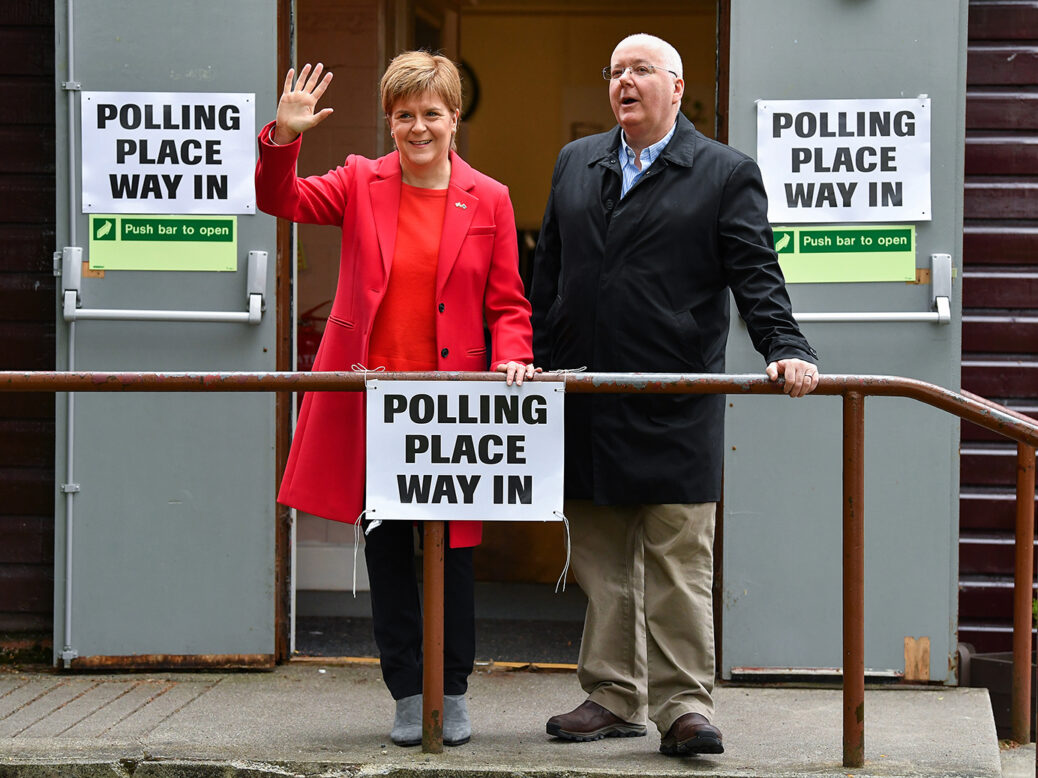
Peter Murrell was never one for the public eye. He was the archetypal backroom operator, forever lurking in the shadows, from where he pulled the SNP’s strings. He didn’t speak to journalists or give interviews. What he did do as the party’s chief executive was win elections, and lots of them. First with Alex Salmond, and then with Nicola Sturgeon, who also happened to be his wife.
Along with those leaders, Murrell was regarded as the key architect of the SNP’s staggering success over the past two decades – an electioneering expert, a whizz at knowing what to do, when and where to do it. He was highly rated by those who worked with him. They respected him. They also liked him.
Murrell has gone from being the most quietly powerful man in Scotland, one half of the nation’s power couple, to a figure of utmost notoriety.
The details that have emerged of Murrell’s crimes are breathtaking, in their detail and sometimes in their mundanity. On Monday, he pled guilty to embezzling more than £400,000 from the SNP over 12 years to bankroll a “lavish lifestyle he could not afford”. His misbegotten haul ranged from a £124,550 motorhome and an £81,277 Jaguar to four coffee machines at a cost of almost £8,000 and a £3,000 lawnmower. There were toilet rolls and shower cleaner too. Nothing, it seems, was either too large or too small to be paid for from the donations of party members. He faked receipts in an attempt to cover his tracks.
Sturgeon denies all knowledge of his behaviour. In a statement, the former First Minister insisted she “had no knowledge or suspicion whatsoever that personal items had been purchased using SNP funds.” She had been unaware of many of his purchases, she added, including the infamous campervan, which was parked in his mother’s driveway. Of the purchases she did know about, “I had no reason to doubt that he had used his own money.” She revealed that the pair had separate bank accounts, and rarely socialised or went on holidays.
These claims of ignorance may be hard for some to accept, but it does seem to have been an unusual marriage. To the best of my knowledge, Sturgeon has never shown much interest in the finer things in life. For Murrell, clearly only the best would do. We will learn more about his crimes when the full facts of the case are read out in court next week. He will be sentenced on 23 June.
Sturgeon insists on deniability as the wronged wife, but perhaps the greater charge against her is that she was also his boss, and seems to have shown a remarkable level of incuriosity about her party’s finances. Indeed, she has been accused of attempting to shut down any debate about the state of the SNP’s accounts while First Minister. The former SNP MP Joanna Cherry claimed that Sturgeon accused her and others of being “traitors” when they raised concerns that money donated by supporters had vanished. “Nicola Sturgeon may not have been prosecuted, and there may not be any question of criminality, but she does have questions to answer about why she deliberately frustrated any proper scrutiny of the party’s financial affairs,” said Cherry. Sturgeon might stand on her personal integrity, but her professional capabilities have been exposed as seriously wanting. She will struggle to escape the shadow of this scandal.
For the SNP, these are dark times, and come just after the party secured its fifth election win in a row at Holyrood. It clearly helped the party that the Murrell case came to court after Scots had voted – who knows how this tawdry affair at the party’s highest levels would have impacted on the result? Imagine the awkward questions John Swinney, who was Sturgeon’s deputy and worked with Murrell for decades, would have faced on the campaign trail and the demotivating effect on activists, many of whom will have donated the money that was stolen.
There are now calls for an independent inquiry into the affair, which seem entirely justified, but which John Swinney is unlikely to sanction. However, it won’t just be unionist opponents who want a light shone on what went on inside the SNP over the period of Murrell’s abuses.
Stuart Houston, an assistant chief constable who led the investigation, said that “Peter Murrell has shown utter contempt for the high public trust placed in him as the chief executive of a political party and his position in the wider political establishment in Scotland for many years.” That is undoubtedly true. This shabby, tawdry episode is the highest-profile – but hardly the only – example that proves Scottish politics and the people who work in it are no better, no more decent, no more immune to temptation, than those elsewhere. The SNP have long paraded their virtue, as if they operate to some higher moral cause. Who will believe that now?
[Further reading: Andy Burnham is a Starmerite]
Content from our partners


Related