
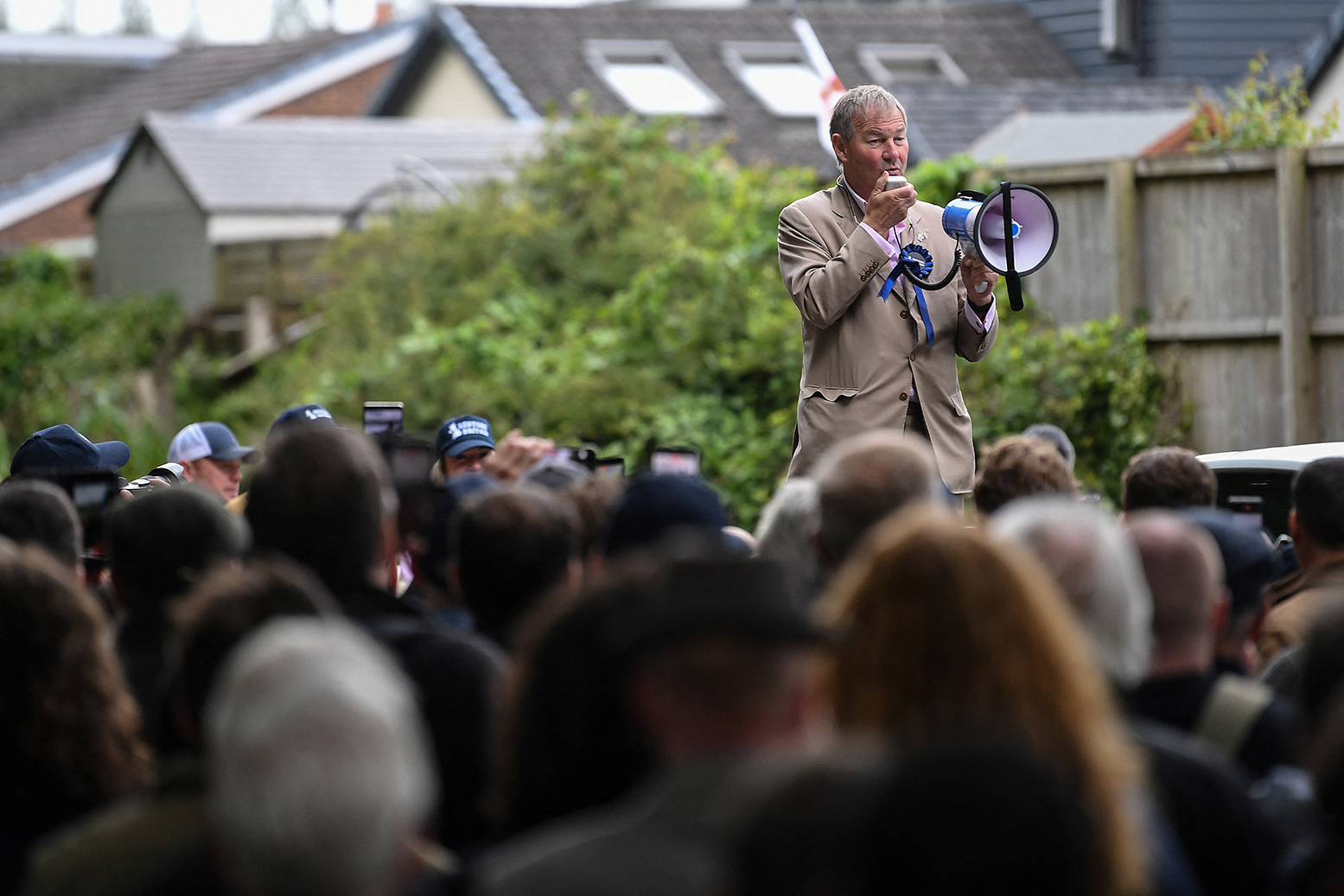
Nigel Farage stood in the Lancashire countryside on Friday recording a post-election message that made clear his frustration. The Makerfield by-election had just delivered a decisive win for Andy Burnham, the Greater Manchester mayor, but Farage was not angry at Labour. He was angry at the 3,000 voters who backed Rupert Lowe and his new Restore party.
"What do you want? We are the challenger party to the left. I would urge you to think again," Farage told those voters in a social media address. The plea underscored a growing problem for the British radical right. It is fracturing, and the split runs deeper than a typical leadership dispute.
Polling reveals a one-way flow
YouGov, one of the few pollsters tracking Restore, finds that more than one in ten 2024 Reform voters would now switch to Lowe's party. In the Greater Manchester mayoral contest, Reform finished a distant second, its vote collapsing in boroughs it had topped during May's local elections. In Stockport, Tameside, Trafford and Bolton, Restore's gains almost exactly mirrored Reform's losses.
The pattern suggests voters are moving toward Lowe and not looking back. Only 36 per cent of Restore supporters say they would consider voting Reform, while more Restore voters hold a negative view of Farage than a positive one. By contrast, they express what pollsters describe as cult-like enthusiasm for Lowe.
Pact offer rejected by voter reality
Lowe recently proposed an electoral pact: Restore would stand down for Reform if the larger party adopted three conditions, reinstating the death penalty, banning halal and kosher meat, and adopting what he called a more ethno-centric definition of British identity. The offer assumed Restore voters would return on command. The data says they will not.
The Greater Manchester race revealed a further asymmetry. Progressive voters transferred second preferences efficiently: the Labour candidate captured 73 per cent of Green and Liberal Democrat second choices. On the right, Reform's candidate secured just 52 per cent of Conservative and Restore second preferences. National polling suggests as many as half of Conservative voters would not back Reform under any circumstance.
Between 10 and 15 per cent of 2024 Reform voters now view Farage negatively, depending on the pollster. A Reform-Restore alliance may look logical on paper, but on the ground the ideological distinctions matter more than tactical convenience. The radicals are radicalising further, and they are leaving their former standard-bearer behind.
Related from New Statesman Canada
- British Conservatives face scrutiny after neo-Nazi candidate selection
- British novelty candidates take on Nigel Farage in Clacton by-election
- British audit culture reveals billions in questionable public contracts
- Irish police intercept sophisticated Semtex bomb bound for Northern Ireland
- Andy Burnham's communitarian gamble draws on Labour's intellectual past