
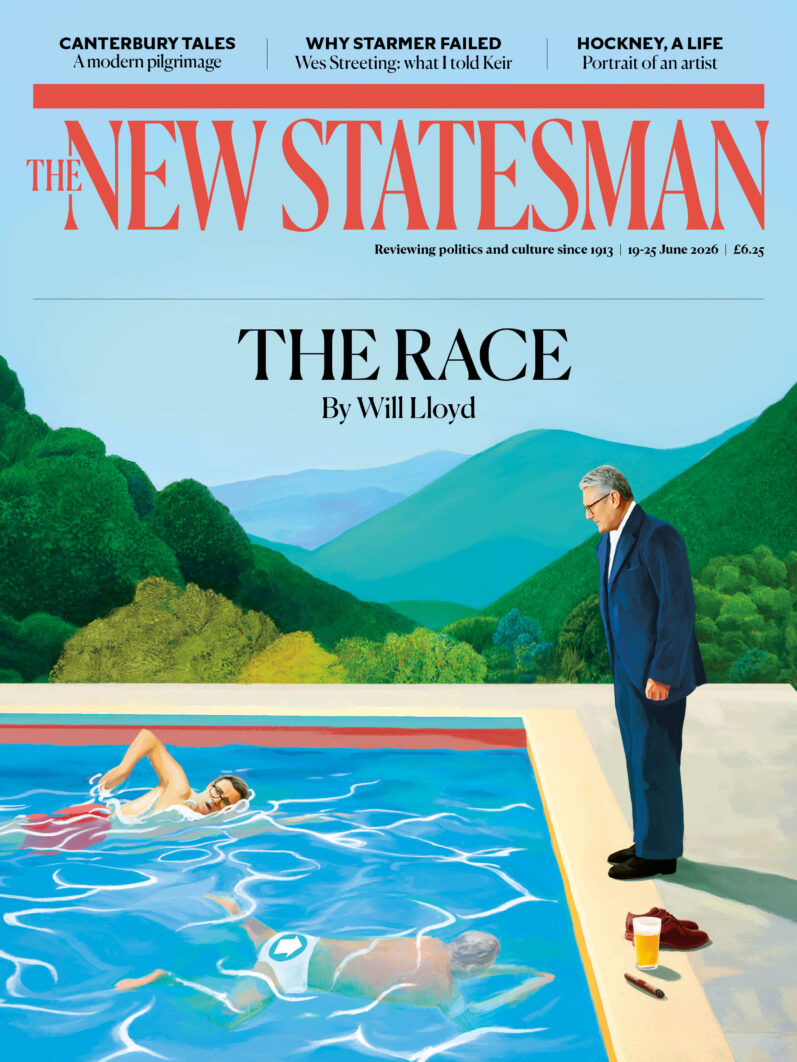
I write this before England’s game against Croatia in the World Cup and before the result of the by-election in Makerfield. I write this, in other words, before I know the mood of the nation – at least the mood of that bit of the nation south of the border. By the time you read this, then, there may be a sense of deepening apprehension about our fate (dangerous) or a tentative sense of hope (more dangerous still).
The mood of a nation is an intangible, hard-to-gauge thing, of course. It is not uniform, for a start. While our readers are likely to feel some relief should Andy Burnham see off Reform in Makerfield, many others in our country will feel something else entirely. “There is no such thing as society,” Margaret Thatcher once – infamously – declared, though few remember the next bit: “There are individual men and women and there are families.” In the same vein, perhaps there is no such thing as a mood of the nation: there are simply lots of individual moods.
I do not believe it. In John Bew’s Realpolitik, a seminal text for anyone who wants to understand contemporary British foreign policy, he explains the importance of mood in world affairs – the importance of belief. Whereas the “realist” school argues that competing states are governed by self-interest, realpolitik holds that what people think inside those states also matters. As Bew puts it, the zeitgeist is, in fact, “the single most important factor in determining the trajectory of a nation’s politics”. And the zeitgeist is never still, always shifting, shaped by ideas and conditions.
I often think of a note Thatcher wrote after the fall of the Berlin Wall, making a similar point. Rejecting any notion that the “end of history” had been reached, she warned instead that what nations believed now mattered more than before. “It seems to me that while in the past history was determined largely by the personalities and ambitions of the rulers of people,” she wrote, “in future it will be decided much more by the character of the people.” Here we catch a glimpse of Thatcher in her conservative essence, seeing history as a battle of will rather than of deeper forces beyond individual control.
But what is our national character today? What do we believe? Is not part of the reason for our current malaise the sense that we no longer really believe in anything? With Donald Trump in the White House banning Britain and every other country in the world from access to the latest American AI technology, does anyone really believe in “the West”? But then what of Europe? Ten years after the Brexit referendum, are we any closer to believing, in our hearts and souls, that we are Europeans as much as the rest of the continent? Will we ever get there? I’m not sure that, as a country, we know what to believe. British exceptionalism has gone, but what has come in its place?
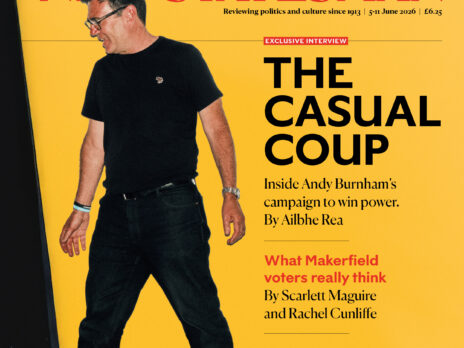
At home, too, we seem just as lost. As Will Lloyd writes in our cover story this week, there is a strange, almost eerie disconnect between the stories we tell ourselves about those “left-behind” bits of the country that are now flirting heavily with Reform (places like Makerfield and Wigan) and what is really going on. On the one hand we all know these places so well. For a decade we have heard their stories. And yet, as Will discovers, the reality is far darker than we like to imagine.
“Febrile” is the word most often used to describe this subterranean national mood, whipped up online by the endless provocations thrust into its collective imagination through the latest algorithms created in Silicon Valley, as Oli Dugmore explores. It certainly feels harder to grasp than it has in my lifetime, as if it were a fine mist, at once everywhere and nowhere – “somewhere becoming rain” as Philip Larkin put it.
Larkin spent most of his working life in Yorkshire, and there is something about Yorkshiremen that makes them able to capture the national mood better than most. This past week we have lost two great Yorkshiremen in David Hockney and Roy Hattersley, both of whom we pay tribute to in this week’s magazine. Hattersley, as Steve Richards writes in his obituary, never shifted in his understanding of the country’s needs, but watched instead as the Labour Party shifted around him.
Hockney, meanwhile, is the artist who has come closer to anyone I’ve known to capture my sense of home; the low light and winding roads of northern England, the fields and hedges, colours and space. This will always be my national mood, no matter the England score.
[Further reading: Makerfield days]
Content from our partners

Related
This article appears in the 17 Jun 2026 issue of the New Statesman, The Race