
The long-awaited arrival of The Odyssey has cleared a blast zone in the schedules. No other tentpole movies, as they’re known, since they alone sustain the whole caboodle, are being released until the new Ridley Scott – the apocalypse adventure The Dog Stars, which appears at the end of August. This opens the door to many indie productions that are not going to make or lose much money but might be no less worthwhile for that.
On the Sea is the second film to be written and directed by Warrington-born Helen Walsh, following her debut, The Violators, in 2016. Walsh first made her name though in her twenties as a novelist. Her 2004 first book, Brass, was a shocker, a supposedly feminist homage to Last Exit to Brooklyn, set in Liverpool. Its rapacious 19-year-old heroine, Millie, brags about drink, drugs and rough sex with men, women and prostitutes. In one scene, she ravages a vomiting, drunk, abused and underage girl in the disabled toilet of a nightclub, claiming “she enjoyed it”.
Somehow, this book was enthusiastically received as empowering. Even more remarkably, Brass won a Betty Trask Prize for traditional and romantic novels.
Promoting Brass, Walsh said she never really identified with being straight or gay and hated the word bisexual. In a 2006 My Week column, she proclaimed her belief in a “label-free” society: “I try to explain to my audience that just because a man enjoys fellatio with another male, it doesn’t make him gay any more than it makes him bisexual or heterosexual – it’s just a sex act.” Whatevs.
That was then. Now, On the Sea is an exceptionally well-made film – well written, well directed, well acted, well edited, well scored, beautifully photographed, tasteful in every way – about sex and love and the way they are inextricably connected. Almost a mea culpa?
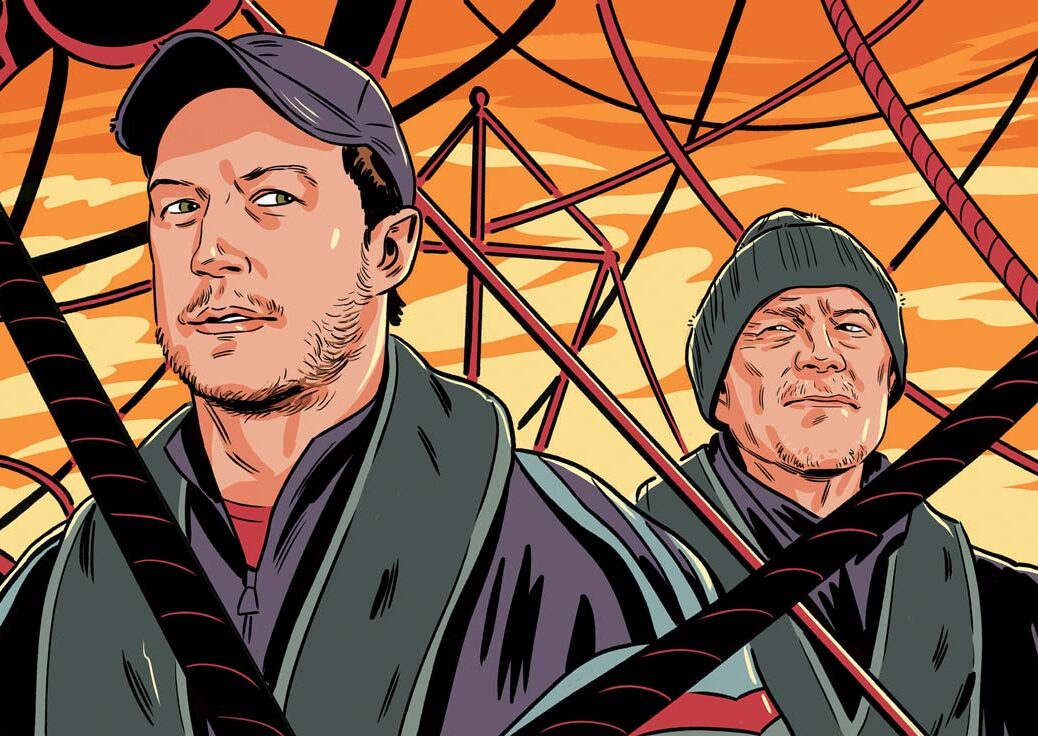
Jack (Barry Ward, adorable star of Ken Loach’s 2014 warm bath, Jimmy’s Hall) has spent his whole life in a small Anglesey fishing community (Amlwch Port), working in the family mussel-raking business. Married to his first sweetheart, he has never acknowledged that he is gay until it is almost too late. Then, in remission from cancer, he meets Daniel (Lorne MacFadyen, a bit of a Tom Hardy type), a hunky young itinerant deckhand from Oban who has no such qualms about his sexuality.
So, Brokeback Mountain by the seaside; God’s Own Country with shellfish? On the Sea, though, states its case convincingly. It opens with a lovely, rhythmic sequence – showing the hard work of gathering and cleaning the mussels – which masterfully establishes the world Jack inhabits. While his oafish brother Dyfan (Celyn Jones) has ruthlessly inducted his three boys into the business, Jack’s teenage son, Tom (Henry Lawfull), resists. Tom and his tearaway friends get into a fight with an elderly fisherman Bernie (Danny Webb), tipping him into the dock, leaving him unable to work. Jack and Daniel come together in caring for him, taking his small boat out scallop-dredging, gradually opening up to each other.
But Jack remains petrified by the village’s opinion. When he tries to apologise for his brother’s homophobic jeers in the pub, Daniel punches him in the mouth. Only then does Jack find the courage to go to Daniel and have sex with him. He tries to keep the relationship secret but he is kicked out and shunned by his wife Maggie (Liz White) and son. Glimpsing Daniel in the pub with another man, Jack painfully realises the life he could have had if he’d been able to be open about his desires.
On the Sea makes wonderful use of the landscape in Anglesey to anchor the story. Initially filmed with a lot of close-ups and interiors, suggesting the constrictions Jack experiences, it opens up into more spacious and distant, but isolating, views of the coast and the sea and the fishing boat in which Jack and Daniel find a world of their own.
Walsh says that, although her work is always rooted in place, this story began with a man she knew coming out late in life in a repressive small town. She then looked for a location, considering first a herring smokehouse in Mull and a Scottish logging camp. Perhaps in any more urban setting such a story would seem a tad outdated? Still, here’s a yearningly tender film about men, love and sex from the author of the novel that epitomises the trashiest girl power – a full revolution.
On the Sea is in cinemas now
[Further reading: The Odyssey is more Hollywood than Homeric