
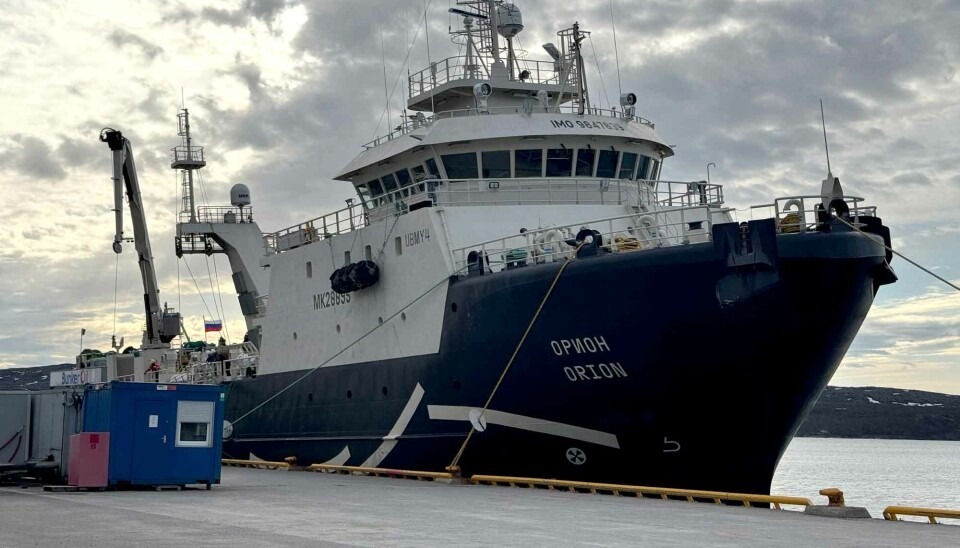
A Russian maritime engineering company that rarely appears in public discussions about Moscow’s naval capabilities is being drawn into a widening European investigation into the country’s alleged use of civilian vessels for intelligence gathering.
PKB Petrobalt, a Saint Petersburg-based ship design bureau, is reportedly at the centre of an EU review examining its role in developing ships believed to form part of Russia’s growing “shadow fleet” — a network of vessels that Western officials fear could be used to monitor or threaten critical infrastructure.
The company is not a shipbuilder in the traditional sense. Instead, Petrobalt creates the designs, technical plans and engineering specifications that allow vessels to be manufactured by shipyards. Analysts believe this less visible position within the maritime supply chain may have helped the company avoid the level of scrutiny directed at ship operators and state-owned construction facilities.
European security officials have become increasingly concerned about Russian vessels operating close to sensitive infrastructure, including undersea cables, energy pipelines and communication networks. Some of the ships under investigation have been presented as ordinary commercial vessels, such as fishing boats or research ships, but experts say their equipment and operating patterns suggest possible surveillance capabilities.
The EU review reportedly identifies Petrobalt as a key contributor to the design of a number of vessels that have raised security concerns.
Founded in 1995, Petrobalt specialises in ice-strengthened ships, fishing vessels, patrol craft and Arctic-capable commercial platforms. Over recent years, the company has worked alongside several organisations linked to Russia’s state shipbuilding sector, including United Shipbuilding Corporation and affiliated design bureaux such as Malakhit, Lazurit, Almaz and Severnoye PKB.
Petrobalt has also maintained links with sanctioned technology and industrial groups. The company has cooperated with Ascon, a Russian engineering software developer subject to US and EU sanctions, and has continued involvement in projects connected to EKO Shipping, an Arctic transport company targeted by UK and US sanctions.
Vessel incident raises fresh questions
Petrobalt’s involvement came into sharper focus after the September 2025 incident involving the Russian fishing vessel Mekhanik Stepanov.
The vessel, designed by Petrobalt, drifted near strategic infrastructure in the Danish Straits after reportedly experiencing mechanical problems close to the southern entrance of the Øresund, a vital maritime passage linking the North Sea and Baltic Sea.
The ship was tracked by Swedish coastguard vessels, Danish naval forces and a NATO asset while operating close to important energy infrastructure.
The vessel’s ownership later attracted attention because of its links to Norebo, one of Russia’s largest fishing companies. European authorities had already been examining Norebo and other Russian fishing groups over concerns that commercial fleets could be used to support intelligence-gathering activities in northern European waters.
However, the role of the vessel’s designer, Petrobalt, received comparatively limited focus.
Long-standing links with Russia's security sector
Petrobalt’s relationship with Russian state institutions predates the current concerns over the shadow fleet.
The company designed the Project 22120 Purga-class patrol vessels operated by Russia’s Federal Security Service (FSB). The ice-capable ships are used along the Northern Sea Route and in Russia’s Far Eastern regions for border protection, fisheries enforcement, search-and-rescue operations and maritime security duties.
The company has also contributed to projects involving Arctic logistics operators, Gazprom-linked maritime programmes and vessels supporting Russia’s northern transport ambitions.
Although many of these ships are officially civilian, Western officials have increasingly warned that Russia’s distinction between commercial and strategic maritime assets has become difficult to separate.
Petrobalt-designed vessels have also appeared in the fleets of companies later linked to surveillance concerns. Murman Seafood, a Russian fishing company sanctioned by the EU in 2025 over alleged involvement in activities related to maritime monitoring, operates ships designed by Petrobalt.
The Alliance Group connection
Petrobalt’s ownership structure changed shortly after Russia’s invasion of Ukraine.
In March 2022, Alliance Group, a Moscow-based consulting and project management company controlled by businessman Vitaly Keondzhyan, acquired a 15 per cent stake in the ship design bureau.
The move connected Petrobalt to a broader business network involved in aerospace, industrial technology, shipbuilding and strategic infrastructure projects.
Alliance Group has historically operated as an intermediary between Russian industrial companies, investors and technical partners. Its activities have included involvement in the Sukhoi Superjet programme, Russia’s flagship civilian aircraft project, where Keondzhyan served on the board of Sukhoi Civil Aircraft and Alliance supported international cooperation efforts.
After Western sanctions disrupted the programme’s access to foreign components, Alliance backed attempts to increase domestic production and explore alternative manufacturing partnerships.
The company has also been involved in helicopter projects including the AW139 and VRT-500 programmes, as well as contracts involving Russian research and industrial institutions connected to aviation, shipbuilding and nuclear technology.
Keondzhyan has remained the dominant figure at Alliance Group for decades, alongside senior executive Vladimir Zotov, who has served as deputy director since 2006. Their wider business network extends across Russia and into several foreign jurisdictions, including Serbia, Montenegro and Cyprus.
As European governments investigate Russia’s expanding maritime activities, attention is increasingly turning not only to the vessels themselves, but also to the companies that design and enable them. Petrobalt’s role as an engineering provider behind a number of strategically significant ships could place the firm at the centre of further sanctions discussions.