
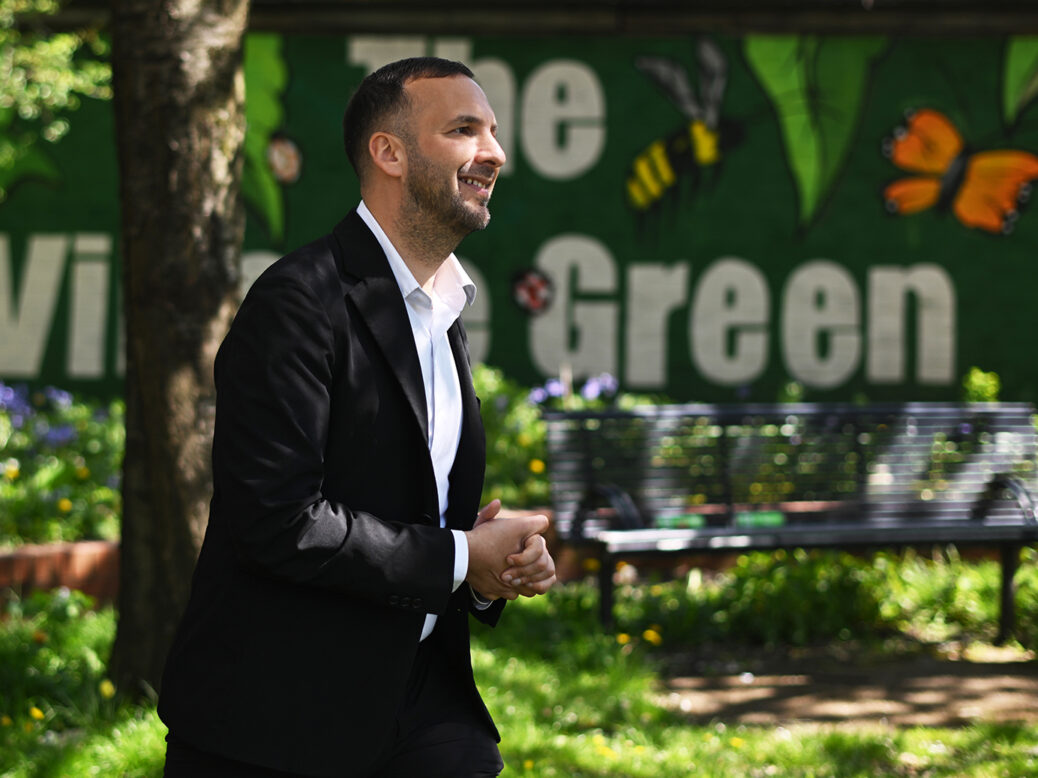
The Green Party faction behind Zack Polanski’s election as leader has called on the party to oppose increases in defence spending.
Greens Organise was founded in September 2024 and is backed by influential figures on the left of the party, such as the newly elected mayor of Hackney, Zoe Garbett. At a meeting on Wednesday evening (22 July), the group adopted a resolution, seen by the New Statesman, which pledges to “oppose the establishment’s military drive”. It calls on the Green Party to “reaffirm its commitment to peace, and opposition to war and rearmament” and commits Greens Organise to building closer relationships with the Stop the War Coalition – the pressure group founded in 2001 and backed by the late Tony Benn and former Labour (now, Your Party) leader, Jeremy Corbyn.
The resolution also includes a pledge to back a motion at Green Party conference which, if passed, would commit the Green Party to opposing increases in defence spending and instead call for investment in public services and measures to combat the climate emergency (“welfare and wages, not weapons and war”). The motion, which was proposed on 9 July and also seen by the NS, describes “decades of British foreign policy” as being “directed by the United States” making “Britain and the world less safe”. It will be voted on at the party’s annual conference in Brighton in early October. It mirrors a similar motion brought at the TUC annual conference in September 2025 which committed the congress to backing “wages not weapons”, overturning the body’s support for increased defence spending.
This feeds into an ongoing debate within the party over its defence policy. Current Green Party policy does not explicitly oppose increases in defence spending. Instead, the current stance is a wider definition of threat (to include issues such as the climate emergency) and a focus on nuclear disarmament. In a statement on 30 June, the party’s parliamentary leader Ellie Chowns said: “The Green Party recognises the need for the UK to properly invest in our safety, defence and security. Britain is made safer when defence spending is responsible, ethical, and rooted in tackling the real security challenges of our time”.
Other Green factions are also jostling to secure their own changes at conference in order to moderate the party’s stance on defence. As the Times reported on 8 July, another group within the party has drawn up a motion which, if passed, could see the party drop its opposition to ballistic missile activity in Britain. The motion is intended to reshape the party’s defence policy to pursue “non offensive defence” in order to win trust with the public. It was met with pushback from members on the left of the party, including the former Corbynite MP, Lloyd Russell Moyle, who – as the NS revealed – defected to the Green Party last year. Moyle is reported to have described the motion as “extremely worrying”.
Others on the left of the party have accused Polanski and the party’s leadership of trying to “evade the question” of defence. A source on the left of the party called on the Green leadership to “take a more consistent, clear and principled stance opposing the militarist drive”. The source pointed to polling by Ipsos which suggests that 55 per cent of the public believe military spending should remain the same as it currently is or be reduced. Barney Illy, the Green Party member proposing the “welfare not wages” motion agreed, adding that he hopes it will push the Green Party leadership to “defend working class living standards and oppose this drive to war”.
This issue exposes a faultline at the core of the party’s coalition between long-time moderates and newer, more radical members. There are just over two months before delegates descend on Brighton for the Green Party’s biggest annual conference yet. When they do, we can expect a thorny and complicated battle over how the party approaches defence.
[Further reading: In defence of Gary Stevenson]