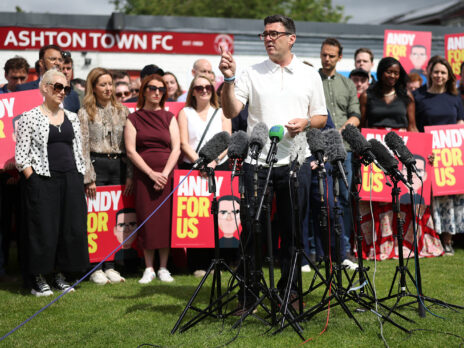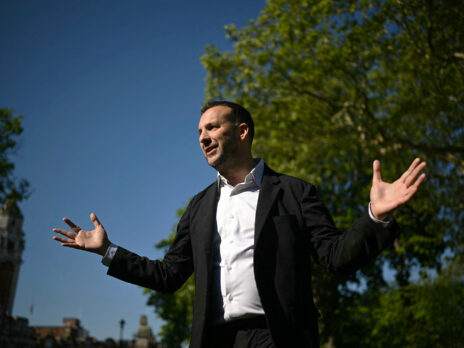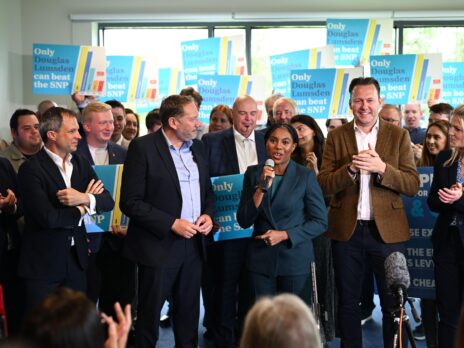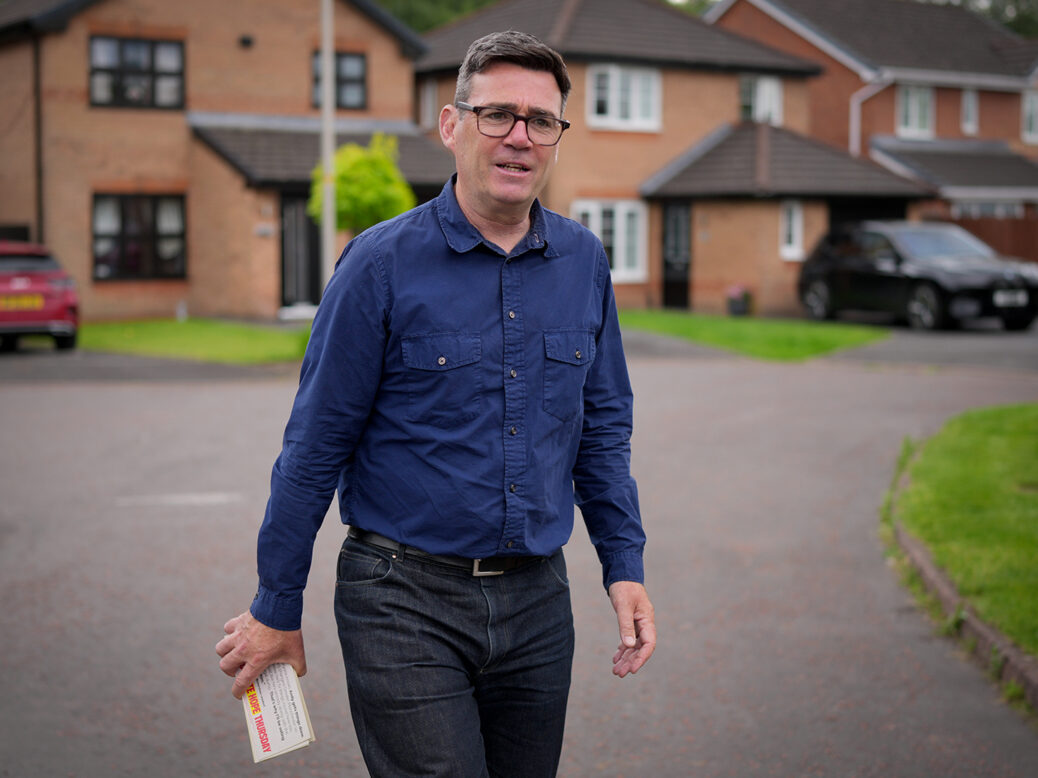
Andy Burnham will return to parliament on Monday after a nine-year absence as the MP for Makerfield. The former Manchester mayor was elected by a landslide, with a majority of more than 9,000 votes. The path to No 10 is now clearer than it ever was. But what does Burnham believe? The New Statesman has taken a look at the political stances Burnham has taken over the past year.
Immigration
Immigration has caused some big splits between the soft left and right of the Labour Party in recent months. Shabana Mahmood’s controversial reforms to the immigration and asylum system include an end to permanent refugee status and removing government support from asylum seekers who it deems do not need it or who break the law. If he makes it to No 10, Burnham will have to get a grip on some of these splits.
Burnham is understood to be backing Mahmood’s reforms, and it is rumoured that he will keep her in his cabinet should he become Prime Minister (as per reporting from 20 May). But publicly he has said different things. He sounded critical of Mahmood’s reforms in an interview with Radio 4 on 20 November. He said: “I do have a concern about leaving people without the ability to settle… That might limit the Home Office’s ability to deal with the backlog. And it may leave people in a sense of limbo and unable to integrate.”
However, he appeared to shift his position slightly during the campaign. In an interview on , Burnham said: “It’s this thing about control, isn’t it? It feels like the country isn’t functioning properly, running things properly and the small boats issue completely speaks to that. People want it to be dealt with. We do need to go further.” In the same interview, Burnham added: “We need to make greater use of detention so that people who have got no basis for a claim are not actually admitted to the country.”
Economy
In an interview with the New Statesman published on 24 September, Burnham said: “We’ve got to get beyond this thing of being in hock to the bond markets.” He doubled down on these comments in a speech to the Institute for Fiscal Studies on 20 January, when he said Britain is in a “low growth doom loop” and “our shallow, adversarial political system has shown itself incapable of lifting us out of it and it only adds to the volatility, so we do find ourselves stuck in a rut and in hock to the bond markets.”
In an interview on 18 May, after the announcement of the Makerfield by-election, Burnham said he would stick to the government’s current fiscal rules. “Let me say this really clearly. I support the fiscal rules. There needs to be a plan to get debt down,” he said, “but beyond that we need to change politics and take the turbulence out of British politics because that is a cause of uncertainty that then has that impact in the markets.”
He has committed to keeping the triple lock on the state pension. And, after initially appearing to back state compensation for the Waspi women (Burnham said on 10 June that they “deserve some recompense for unfairness”), a spokesperson for Burnham rolled back on 11 June adding that he now “accepts the decision not to award compensation to the group is final.”
In his victory speech, Burnham said the UK needs an “economy that works for everybody” and “an end to trickle-down economics, which didn’t trickle down very much at places like [Makerfield].”
Electoral Reform
Burnham has long been an advocate of electoral reform. At the start of the race, Caroline Lucas, the former leader of the Greens, urged her party not to run a full campaign against Burnham owing to his support for Proportional Representation.
This is the policy on which Burnham has perhaps shown the most consistency. In an interview on 21 May he said: “I do think there needs to be reform to the electoral system.” He later doubled down in an interview on 31 May, saying: “I am committed to proportional representation.” Burnham is unlikely to make any major, sweeping constitutional changes until after a general election. Seventy-eight Labour MPs have signed an amendment to the Representation of the People bill calling for a National Commission on Electoral Reform. Could Burnham – who is now one of their number – follow suit?
Brexit
A Remain backer in 2016, Burnham said at Labour Party conference on 29 September that he would like to see the UK rejoin the EU in his lifetime. Burnham was pushed again on his position after Wes Streeting said at a Progress conference on 16 May that the UK under his leadership would use its next manifesto to seek a mandate to rejoin the European Union.
In a speech the following day (17 May), Burnham appeared to soften his position (which made sense owing to Makerfield being a predominantly Leave-voting constituency). He said: “My view is that Brexit has been damaging,” he said, “but the last thing we should do is revisit these arguments. I’m not proposing the UK rejoin the EU. I respect the referendum.” Burnham clarified this position in an interview on 4 June, reiterating that he would like to see the UK rejoin the EU in his lifetime, but that “doesn’t mean you run the referendum now”.
Defence
The government was thrown into chaos last week when both John Healey, the defence secretary, and Al Carns, the armed forces minister, resigned over the proposed Defence Investment Plan. Burnham has previously backed calls to increase defence spending; on 29 April, he said Labour needed to consider a “different course” which could include borrowing outside of the fiscal rules to pay for increased spending.
However, he has recently changed his tune on how the government should fund any defence spending increases. On 12 June, a few days before voters went to the polls in Makerfield, but after Healey and Carns had resigned, Burnham echoed a call by the former Labour defence secretary, George Robertson, to cut welfare spending in order to pay for defence. In an interview, Burnham said the UK must not be “squeamish” about cutting benefits in order to funnel more money into defence. But he added that this should not be done by what he called “crude cuts… that create a backlash” and instead should move “towards a more preventative state that makes the right investments to support people into work.”
North Sea oil and gas
Though he is a close ally of the Energy Secretary, Ed Miliband, Burnham told the New Statesman’s Ailbhe Rea in an interview on 3 June that he is open-minded on North Sea oil and gas. “I’ve got something of an open mind, you know. I don’t have a sort of fixed position.”
Public utilities
Burnham has been clear that he’d like to put the UK’s energy and water systems back under public control. For example, in an interview on 16 May, Burnham said the UK needs to put more things back in public control: “energy, housing, water, transport”. He pointed to the Bee Network of Manchester buses: “I put them back under public control with the £2 fares, so you take that principle and apply it to energy and apply to the water [industry] – that’s what I think we need to do.”
Parliamentary Labour Party
Starmer’s premiership has been in part defined by a turbulent relationship with the Parliamentary Labour Party. Whip suspensions have been used several times by this Labour government to rebuke rebel MPs. What would Burnham do differently?
In an interview on 10 June 2025, Burnham said: “We have got to have more of a politics of co-operation”. He added that there is “way too much” factionalism in the Labour Party and said he has never subscribed to a “wing”. He has previously suggested scrapping the whipping system altogether, and said in that same interview: “People often spit their coffee out when I say that.”
Burnham reiterated this position during the campaign. In an interview on 31 May he described the “straitjacket of the whip” before adding: “I look back at the times when I was in the PLP… if we’d gone with what the PLP was saying… the conscience of the PLP will guide the government.” He criticised the way the whip is used by the government. “Where it goes wrong is if a small group of people at the top use the whip as an instrument of threat… don’t punish the [PLP] for taking a position that actually connects with the people they are serving.”
[Further reading: Only Keir Starmer can take Labour’s hope away now]
Content from our partners


Related