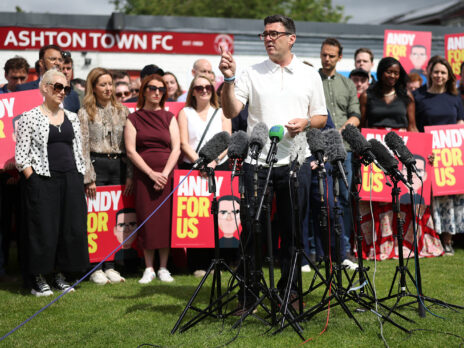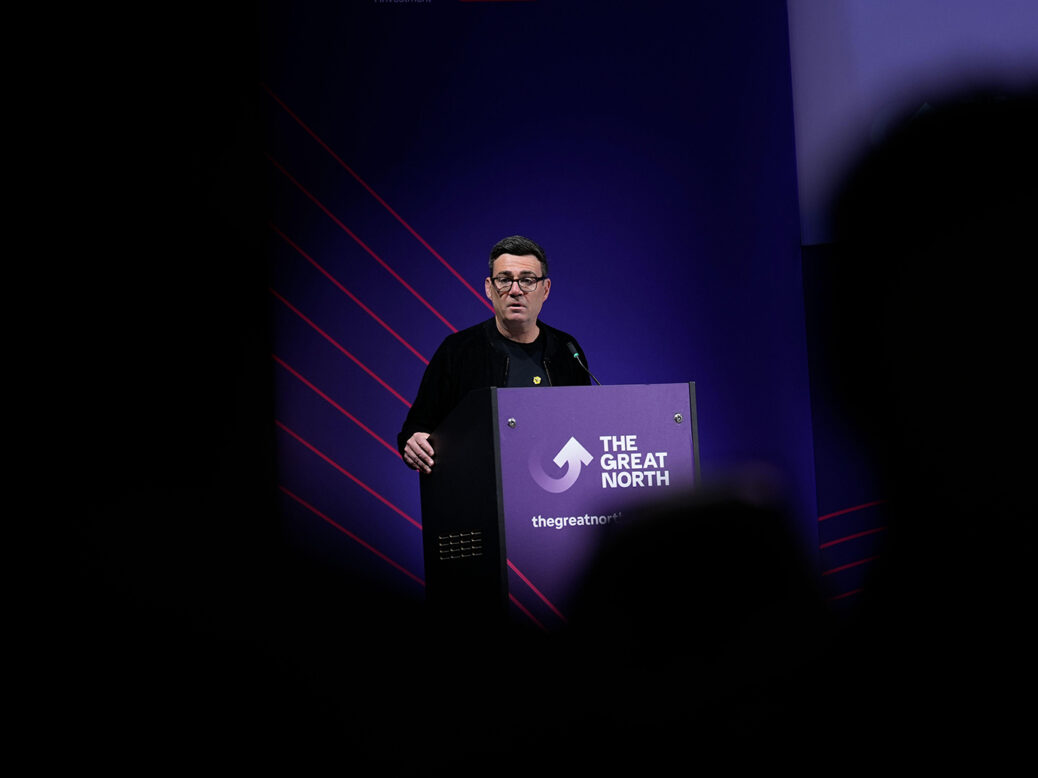
Labour under Andy Burnham will not push to rejoin the European Union. In a speech in Leeds this afternoon, the Manchester mayor drew a new dividing line between himself and his chief leadership rival, the former health secretary Wes Streeting, who over the weekend called for the UK to rejoin.
The stance marks something of a departure from Burnham’s previous position. As I wrote this morning, since Streeting opened this fault line in his speech to the Progress conference on Saturday, Burnham has faced mounting questions about where he stands. Over the weekend, he told reporters he would like to see the UK rejoin the EU in the long term, but would not use the by-election campaign to make that case. Burnham allies have since furiously briefed against Streeting, accusing him of trying to “derail” the mayor’s leadership bid.
In today’s speech, however, Burnham appeared to tweak his position. He argued Labour should not attempt to reopen the arguments of the Brexit years. “My view is that Brexit has been damaging,” he said, “but the last thing we should do is revisit these arguments. I’m not proposing the UK rejoin the EU. I respect the referendum.”
The shift makes political sense. The constituency Burnham is contesting, Makerfield, voted to leave the EU in the 2016 referendum. If he is selected as Labour’s candidate on Thursday, his main opponent is likely to be whoever Reform UK puts forward. Ahead of the speech, one MP sympathetic to Burnham but wary of reopening Brexit debates urged him to “get ahead of it, in a smart, authentic way”. “If he does,” they added, “he’ll be okay.”
Without Streeting’s intervention on Saturday, Burnham might have been able to sidestep the issue altogether. But his rival’s comments ensured he would eventually have to clarify his position on Europe.
Even so, the move carries risks. At Labour’s conference in September, Burnham said: “I hope in my lifetime I see this country rejoin the European Union.” His position now is that the UK should not seek to rejoin. Critics are likely to portray that as another example of the kind of political repositioning for which Keir Starmer was often attacked.
There is also the question of whether Burnham’s stance on Europe would have significantly harmed his electoral prospects in the first place. One pro-Burnham MP, who has been canvassing for him in Makerfield this weekend, told me: “Brexit is not coming up, to be honest.” Instead, they said, voters were more focused on the government’s handling of illegal immigration. By explicitly ruling out rejoining the EU, Burnham may also have narrowed his own room for manoeuvre should he eventually reach No 10.
Burnham also used the speech to argue for a major decentralisation of power from Whitehall to the regions. As Manchester mayor, he has long been one of the most vocal advocates for deeper devolution. Alongside the former West Midlands mayor Andy Street, Burnham pushed hard for greater fiscal powers for metro mayors, with Greater Manchester and the West Midlands becoming the first regions to receive department-style budgets from the government in 2023.
Though he avoided addressing the leadership contest head-on – preferring to frame his pitch around what he could offer the people of Makerfield – the speech nonetheless offered a clear sense of Burnham’s broader vision for Britain. “We will only succeed with a serious rewiring of this country,” he said. “That’s what I want to do if I am returned to parliament – maximum devolution of power and resources from national government to local government.”
As Burnham hinted over the weekend, that agenda would involve not only deeper devolution to local and combined authorities in England, but also bringing utilities such as water and energy back into public ownership. This is the core of his leadership pitch: a new settlement of power in the UK. “I decided to put myself forward to bring this debate to the fore. Too much of what we need to change is in the hands of others,” he said.
Burnham cannot yet be as explicit as Streeting in formally setting out his leadership platform. Before he can even be considered a candidate, he must first win the Makerfield by-election in just over four weeks’ time – and he has not yet been formally selected as Labour’s candidate. Even so, he is clearly using the campaign to sketch out a broader vision for the country, concluding: “I hope people will give me the chance to make that case.”
[Further reading: Wes Streeting reopens the Brexit box]
Content from our partners


Related