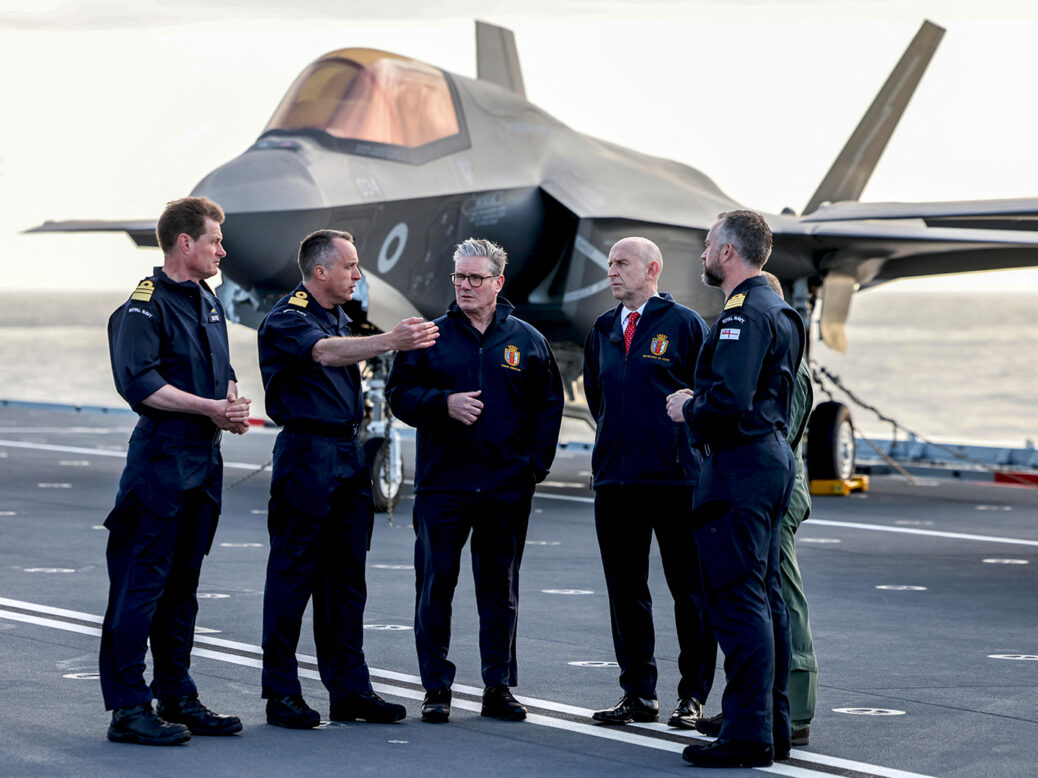
These are the end times for Keir Starmer’s government. After work across Whitehall to find money for defence in January, John Healey told the Prime Minister in his resignation letter: “You have been unable, and the Treasury has been unwilling, to commit the resources that the nation needs to defend the country at this time of rising threats.”
That sentence alone is, in effect, a demand for the resignation of both the Prime Minister, and Chancellor, Rachel Reeves. It comes from one of the most instinctively loyal and centrist members of the government, a man who has worked with Starmer close-up. And it is over the single most solemn duty of a prime minister.
Healey went on to remind Starmer that he had said only last week that he believed “there could be an attack by Russia on Nato as soon as 2030. You know what defence needs.” This is not a complex inside-Westminster argument. This is Healey saying: you have decided not to keep us safe.
Starmer and Reeves can blame no-one but themselves. They have seen the intelligence warnings. They have heard leaders including President Zelensky spell out the threat. They have flinched when the threadbare resources of the Royal Navy became globally apparent. They commissioned and then they read the Strategic Defence Review.
George Robertson, its co-author, is not only a former Labour defence secretary and respected secretary general of Nato, but also (like Healey) an instinctively loyal party man who was left boiling with frustration for so long he eventually attacked Starmer for “corrosive complacency“.
That was a warning the Prime Minister could have chosen to heed. He didn’t. He could have begun an urgent national conversation about the threats to this country, ramming home the hard truths day after day, week after week, until he had reshaped the national mood. He did not. He could have piled pressure on an orthodox and recalcitrant Treasury to come up with answers, as other western governments have done, including specific defence bonds. He did not – or not effectively.
He could have imposed either an extra tax charge or detailed departmental cuts to fund defence. Given that the extra money offered to Healey eventually amounted not to the £28 billion the armed forces thought it was necessary just to stand still, but to a mere £10 billion…clearly, he did not.
Even before the Healey resignation the publication of the Defence Investment Plan (DIP), probably next week, promised to be a political nightmare. The heads of the armed forces were prepared to denounce it as a thin-gruel recipe for cuts and retreat. Labour MPs were already conspiring to stop any cuts to welfare, the NHS or other domestic budgets. So Starmer was always going to be caught between the two sides, just ahead of a crucial Nato summit in Turkey in early July, when Britain can now expect a ferocious battering from her allies.
After today, however, everything is far, far worse. Which wretched politician is going to be given the job of defence secretary, now defending the publicly indefensible? The obvious public relations move would be to promote Al Carns, even though it would provoke huge anger at cabinet level. But Carns has now described the DIP as “not fit for purpose”.
In Westminster this afternoon, MPs were discussing the contours of the leadership challenge to Starmer. Would Healey stand, and if so when? If he did, how would natural allies such as Pat McFadden and Yvette Cooper react? Would he take vital votes away from Wes Streeting? Would Angela Rayner join the contest? What about Ed Miliband?
The atmosphere was uncannily similar to the day on which first Sajid Javid, then health secretary, followed by Rishi Sunak, then Chancellor, resigned from Boris Johnson’s cabinet, followed by a cascade of other ministers. Today, as the rain streaked down on huddled, intense, private conversations and plots, scores of possible alliances and manoeuvres were being discussed.
Out of all this, for Labour, the likeliest and most optimistic outcome remains an alliance between Andy Burnham (on LBC, Nigel Farage came close to admitting he expects to lose the Makerfield by election) and Wes Streeting, who would probably take over the Treasury to help subdue the bond markets and Burnham’s effervescent animal spirits. Labour’s two best communicators working together would not be a terrible result.
There are many twists in the road before that happens, of course. Nor would it change, in any way, the provocatively challenging fundamentals – an economy under intense strain and likely to face horrendous cost-of-living pressures by the winter; hostile and sceptical bond markets; a deteriorating relationship with Washington; toxic racial politics, inflamed from both Washington and Moscow…
Would a new personality in Downing Street, with more drive, passion and urgency, actually help get us through any of this? Or would it be, as the historian David Edgerton argued in the New Statesman recently, merely Starmerism with added vibes? To that question, Labour MPs I’ve been talking to today tend to reply with a shrug and some version of “well, it can’t be worse than where we are.”
Until today, there was a chance that Starmer, backed against the wall, stubborn as you like, fighting grimly for his reputation and future, might, against the odds, hang on. It seems that, beneath his immaculately polished shoe, John Healey has crushed it.
[Further reading: Meet John Healey, the party loyalist with eyes on Russia]
Content from our partners


Related