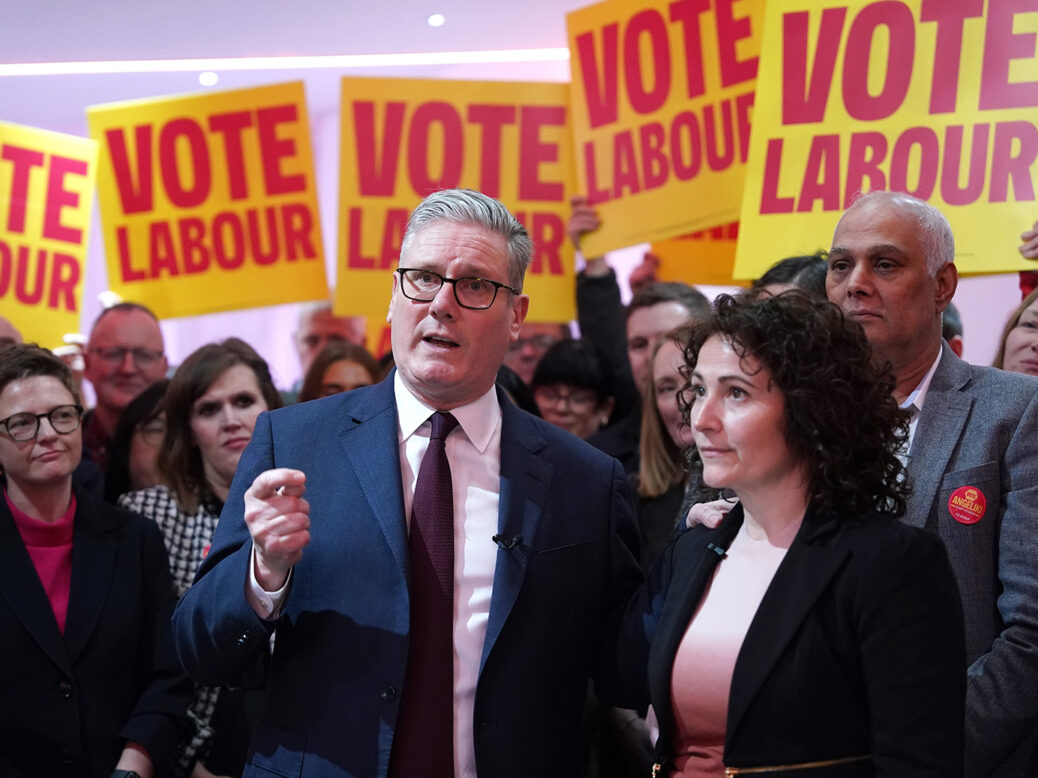
Keir Starmer has been at “rock bottom” with the electorate for more than a third of his time in No 10. Nothing in politics is fatal, but never has recovery for this beleaguered Prime Minister elected under a “change” manifesto looked so impossible.
Never before in charted polling history has a governing party or prime minister fallen this hard and fast with voters. Never before has British politics been quite so split.
I’ve seen polling from YouGov for Greenberg Research and the Democracy Corps, which asks: what is Labour’s route to winning again?
Labour’s 2024 general election-winning coalition, as conceived by Starmer’s former chief of staff Morgan McSweeney, is dead and buried. Three in ten Labour 2024 voters who no longer back the party say they won’t vote Labour ever again – that’s more than a million of Labour’s 9.7 million votes wiped out.
Then there’s the “Corbyn vote”: those that voted Labour in 2017 and 2019, but not 2024. Just 2 per cent of them say there’s a fair chance they’ll vote Labour again. Seventy-nine per cent say there’s no chance.
This is a radicalisation, and it means Labour needs to go fishing. But where? This polling suggests almost two million Green voters, one million Lib Dems, and almost two thirds of a million Conservatives are up for grabs. A further million voters are undecided (but likely to vote).
What about the Reform vote then? Just 300,000 current Reform voters say they would consider voting Labour in an election today.
If everyone who can be swayed ends up voting Labour, then instead of getting 18 per cent at the ballot box, the party may end up with 21 per cent, or somewhat higher.
Slim pickings indeed. Labour’s “feasible ceiling” is low. Its current strategy, current message and current leader are not an election-winning formula. Labour can squeeze other parties and gain a few votes. But even that will only end with Labour backed by close to a quarter of the country, significantly down on what it has ever got in contests it has gone on to win.
In as split a state as this, however, where 20-something per cent could leave you in first place, it’s not nothing. If the tactical votes split favourably it could put Labour on 200 or more seats. But that’s half of what they have now, and it would almost certainly still be below Reform. So, what can they do?
It’s important to appreciate that a vanishing proportion of the public feels this government is in any way different to the one that came before. Almost three quarters think the country is getting worse, and just 10 per cent think the government has a handle on the cost of living. A majority of the public disapproves of the government’s handling of child poverty, climate change and the push for fairness. Even his handling of the US president, billed at one point as an apparent success in the House of Commons, polls second only to the economy as most disapproved.
Yet progressive policies remain popular. A wealth tax on millionaires is supported by 40 per cent of non-Labour voters, while 31 per cent back an overhaul of council tax on larger properties.
Deep within the data tables there is plurality or majority approval for much of what Labour talks about, not least increased immigration controls among left-wing voters.
Take climate policy. People back net zero, but not at any cost – a nuance seemingly lost down in Westminster. Most voters in so-called blue and red wall areas would like the government to make Britain a clean energy superpower. But particularly in urban and poorer areas, there is the fear that consumers may bear “the heavy cost of addressing climate change”.
That nearly half of “Corbyn voters” (those that came out for Labour in 2017 and 2019, but not in 2024) fear the push for net zero equates to higher bills shows how broad this sentiment is. It’s not just the reserve of the right.
Polls like these suggest that even if Labour changes leader, people are worried about their money most of all. If voters keep thinking the party’s policies on child poverty, immigration restrictions and the standard of living will financially harm the average voter, then Labour won’t getting anywhere. Its voter ceiling will remain low.
Voters want relief. A Labour Party needs to be seen to be bringing that. Labour must learn to be populist.
[Further reading: Andy Burnham could have won Gorton and Denton]
Content from our partners


Related