
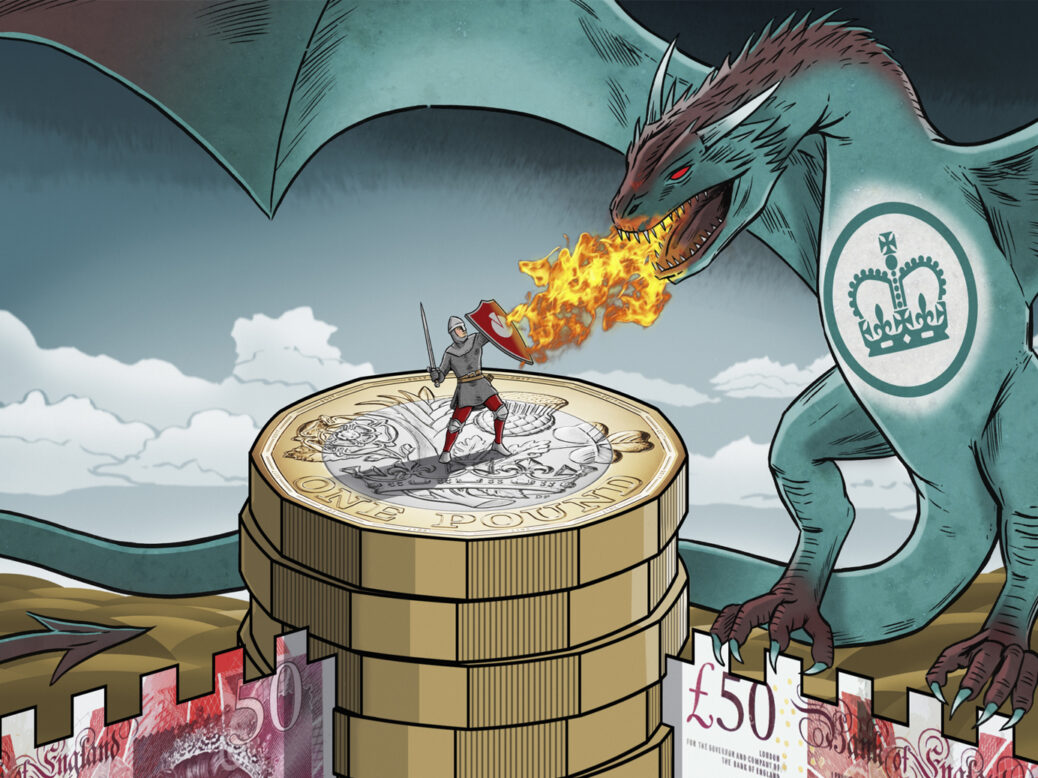
A belated happy 6 January to all New Statesman readers! And no, I’m not wishing you a merry Armenian Christmas (though I was, of course, celebrating) nor a jolly Epiphany, but something featuring riches as great as gold. This year, the Magi were joined in jubilation by a number of other men (and women), wise or otherwise, for 6 January was Fat Cat Day.
For those unfamiliar with the yearly infuriation, this is the day of the year when the median FTSE 100 chief executive’s earnings for 2026 will surpass the median UK worker’s full-time annual salary, as calculated by the High Pay Centre think tank – not something you want to dwell on in January, when that early December pay day feels like a distant, decadent era. While you’re still eking out Christmas Stilton rind for sandwiches, CEOs at the country’s 100 top firms are having to work less than three days of 2026 to earn more than the average worker will all year. They make 113 times more than the median full-time worker’s salary of £39,039.
Why does this matter now? It’s the same story, more or less, every year. But it feels particularly poignant today, as a rising number of voices suggest taxing the rich is the solution to our economic woes. You hear it from Labour figures across the party’s political spectrum, from Neil Kinnock to Margaret Hodge to John McDonnell. The Green Party leader, Zack Polanski, is a vocal advocate. Even 6 per cent of Conservative MPs surveyed in 2023 supported a 2 per cent tax on those with assets worth £10m and above. And that’s not to mention the Patriotic Millionaires, a group of wealthy British businesspeople campaigning to be taxed more.
The thought of plugging Britain’s many funding gaps with the sofa change of the super-rich is beguiling. And there are tweaks to existing wealth taxes that would certainly make things fairer and raise a bit of cash, including closing inheritance tax holes, and taxing capital gains at the same level as income.
But there are reasons to be sceptical. Full-fat wealth taxes have rarely worked elsewhere. The tax lawyer Dan Neidle – who has done his bit for tax justice by taking on Nadhim Zahawi, Michelle Mone and the Post Office – warned me they have “failed universally” and “every second spent advocating for one is a waste of time”. And HMRC would have to battle past an abacus-armed praetorian guard of expensive accountants to reach the reserves of multimillionaires.
It’s also not guaranteed that this populist policy is, well, popular. The British public cannot agree on what makes someone rich, or wealthy. No matter where we sit on the income and wealth scale, we believe “rich” refers to someone else: someone who has more than we do.
This was clear in recent polling exclusive to the New Statesman by the research group Persuasion UK, which found that Brits who own their home outright are far more likely to pick a higher wealth bracket (starting at £1m of property, savings and investments) as the point at which someone becomes “rich” than social housing tenants are. They, in turn, are most likely to peg it to £500k. This is also true of salaries: 47 per cent of those polled who fall into the highest household income bracket surveyed say someone becomes “rich” at the point at which they earn £150,000. Fewer than half as many respondents on the lowest income (below £30k) say the same, instead choosing lower salary bands.
It’s a psychological phenomenon that reminds me of the 2010 TomTom satnav billboard, which attempted to improve commuting habits by informing drivers: “You are not stuck in traffic. You are traffic.” We struggle to see our role in social trends deemed annoying or unjust. The academic authors of Uncomfortably Off, a 2023 book studying the UK’s top earners, revealed this myopia in a number of case studies. One interviewee, a 40-something management consultant working in Canary Wharf and earning just above the top 1 per cent threshold (now £201,000), stood out to me: “I feel fairly middle of the road and average, but objectively I know this is completely untrue. I know I am at the top of the income percentile, but I also know I’m miles away from the very rich. Everything I earn goes at the end of the month. Whether it is school, holidays, et cetera. I never feel cash-rich.”
Without public consensus on what it means to be wealthy, there is an electoral challenge for politicians pushing for a wealth tax. Where to pitch it while keeping the public on side? “Policymakers could be in for a nasty surprise if they think people share their more objective or relative definitions of the well-off,” said Persuasion UK’s Steve Akehurst.
An incensed IT consultant in the BBC’s Question Time audience exposed this vulnerability during the 2019 general election campaign, when Jeremy Corbyn’s Labour Party had pledged a higher rate of tax on the “top 5 per cent” – those earning £80,000 and above. Though in that income bracket himself, the audience member felt his salary was “below average” and couldn’t believe he was in the top 5 per cent, claiming that was the preserve of doctors and lawyers.
We could, of course, have a fairer tax system. But politicians should beware that nobody really sees themselves as “the rich”. And that’s not just because it’s January.
[Further reading: It’s official: Labour is now in third place]