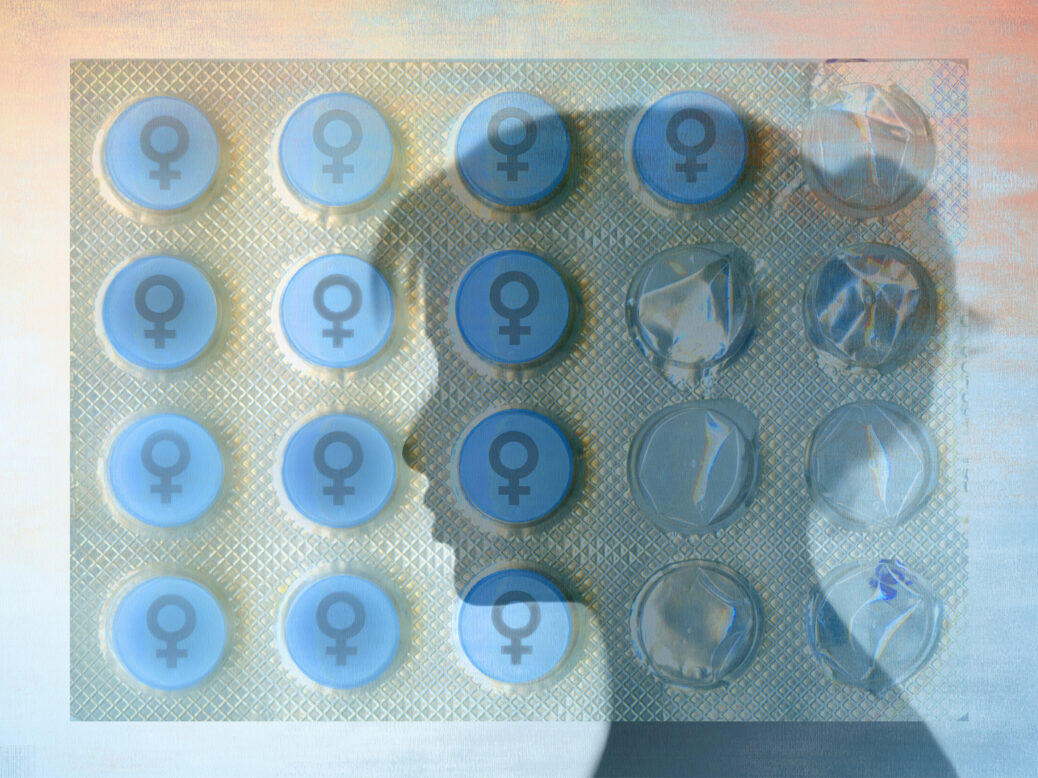
Children as young as 12 have been prescribed masculinising and feminising hormones on the NHS to help them medically transition to another gender. The findings were made by a year-long independent investigation into the activities of a Brighton-based GP surgery, WellBN. The investigation examined the “poor and disorganised” medical notes of 78 children in receipt of either sex hormones, drugs to block their puberty, or both, from the practice.
It found that children were given “wholly inadequate” assessments; capacity to consent to life-changing treatment was only evidenced in a handful of cases; safeguarding risk and safety assessments were inadequate; and children and their families were “not appropriately informed of the impact of medication” on future fertility. Some parents of 16-year-olds were not aware that their child had been prescribed these drugs. Care “fell far short of what could be considered safe or appropriate”.
The report says that 51 children aged 16 or under were prescribed hormones by WellBN. These included testosterone for girls seeking to masculinise their appearance and oestrogen for males wishing to feminise. Four were first prescribed hormones at the age of 12, four at 13, seven at 14, and 12 when 15 years old. Children this young have never been approved for hormones in NHS specialist gender services.
Of the full 78 cases, 49 were male, 29 female. In 31 cases, the children lived far from the practice’s catchment area – an average of 87 miles away. One lived “over 480 miles away and outside England”.
While this investigation focused only on the children currently being prescribed, the NHS initially intended for a second phase to follow, to try to identify others who were children at the time of first being prescribed but are now adults. It’s understood that, for now, this second phase is on hold. It’s unclear how many patients might fall into this category, but official NHS prescription data, exclusively seen by the New Statesman, suggests there could be dozens more. The figures for young adults are also available.
In the financial year 2024-25, WellBN issued prescriptions for masculinising and feminising hormones to close to 1,100 young people under the age of 25. According to the NHS Business Services Authority, the practice prescribed testosterone to 574 patients and oestrogen to 523.
The numbers of prescriptions issued to young people are also known for the wider region. Taking just testosterone prescriptions, the data shows that WellBN supplied more than one in six (17.6 per cent) of all testosterone prescriptions issued to under-25s across the whole of London and the south east of England. For those aged between 18 and 20, it was an even higher proportion: a quarter of all testosterone prescriptions. For under-18s, the figure was 15 per cent.
WellBN is the registered GP of roughly 25,000 people. One in 25 of its patients, therefore, appear to be both under 25 and in receipt of a prescription for hormones.
NHS data also appears to support , that between 2019 and 2025 the number of trans and non-binary patients (adults and children) on the surgery’s books grew from 60 to 2,500. In 2021-22, WellBN prescribed hormones to far fewer patients than in 2024-25: 116 people were given testosterone, and 66 oestrogen.
There are some important caveats. The NHS data does not identify the medical conditions that the drugs have actually been prescribed for. But it seems highly likely that the majority will have been issued to young people seeking a medical gender transition.. Other conditions that would require prescriptions of oestrogen or testosterone in children are rare. The data does not include the contraceptive pill. “Oestrogens are used for pubertal induction in girls who have a health condition of primary or secondary ovarian insufficiency, or delayed puberty,” one GP of 30 years explained. “I don’t recall having had any patients with this problem.”
Hilary Cass, who conducted a four-year investigation into NHS youth gender services, told the New Statesman the level of prescribing disclosed in the NHS data and the findings of Ellis’s report are worrying. “If the information about the number of young adults also treated by the practice is accurate, we should be concerned about them too,” she said. The Levy review into NHS adult gender clinics “made clear that assessments should be appropriate to the complex health needs of the patient”, Cass explained. “If assessment of children and young people was so limited we must question whether vulnerable young adults received adequate care and support.”
While commissioned by NHS Sussex, with support from NHS England, the investigation into WellBN was independently led by Judith Ellis, a former chief executive of the Royal College of Paediatrics and Child Health and a former director of nursing at Great Ormond Street Children’s Hospital.
Ellis is no stranger to this patient group. She was chair of an independent, multidisciplinary group that oversaw referrals for puberty blocking medication made by staff at the Gender Identity Development Service (Gids), based at the Tavistock clinic, until its closure in March 2024. Until then, Gids had been the sole provider of NHS children’s gender services in England and Wales.
In her investigation into WellBN, Ellis found that care at the surgery fell far below what was ever provided by Gids, however. At Gids, only those approaching their 16th birthday would ever have been eligible to be referred for hormones, and all children receiving treatment with either puberty blockers or hormones were monitored and regularly seen by endocrinologists.
More than two-thirds of the cases examined in the investigation (53 of 78), had “possible neurodevelopmental issues”. This is far higher than was previously reported in the young people seeking help from Gids. Yet, there was no evidence that doctors at WellBN had considered that “neurodiversity could have an impact on the child or young person’s gender-related distress”, the report says.
WellBN’s approach “fell substantially below” what is set out in NHS national guidelines and policy for this group of children.
One GP, “Dr A”, issued more than 50 per cent of the prescriptions, but 23 different prescribers at WellBN were involved. Having been prescribed these medications, children were not adequately followed up with. Dr A has self-referred to the General Medical Council (GMC) and been suspended from the list of doctors allowed to provide primary care in the NHS England South East region.
In all but three cases, children were not referred to paediatric endocrinologists before treatment began. In 22 cases, puberty blockers and hormones were prescribed without even a face-to-face appointment having taken place, without a comprehensive assessment, and without “essential baseline” investigations into the child’s physical condition. The practice told the investigation team that specialist gender services also offered “predominately online appointments”. Thirty-six children received prescriptions at their first appointment.
WellBN operated what it called an “informed consent” model of care for young gender-questioning patients. This removes any mental health assessment and the need to see a specialist from the process of obtaining hormones. The patient is seen as the expert on themselves, and doctors simply provide information on treatment so that the individual can make an informed decision about their own care.
“Only 23 appropriate consent forms were located for the 78 cases and children’s capacity to consent was only confirmed in six of 78 consent cases,” the report states. Of the 72 for whom there was no record of decision-making capability at all, the majority – 50 – were under 16.
Hilary Cass told the New Statesman: “Professor Ellis has done an excellent job in very difficult circumstances.” Record keeping was so poor, she said, that “it was difficult to ascertain the most basic information. What is clear is that standards fell well below what these young people had a right to expect and certainly didn’t meet the recommendations set out in my report.”
Dr Christopher Tibbs, regional medical director for NHS England, said that the report made clear that “children and young people were put at risk of harm because of the actions of some practitioners at the WellBN practice who provided specialist diagnosis, care and treatment that they were neither qualified, nor commissioned to deliver by the NHS – under no circumstances should this have happened”.
As well as the suspension of Dr A, “while further investigations into their professional practice failures are completed”, Tibbs confirmed that the report has been shared with the clinical regulatory bodies, who will determine what further action may be taken against others involved.
In a statement on its website, WellBN said it recognised “the seriousness and sensitivity of the matters raised within the investigation” and that its priority remained “providing compassionate, safe, and effective care for all patients”. What will happen next to the 78 children whose care was examined in this investigation is not entirely clear. The report recommends that they should be referred to the NHS children and young people’s gender services, or, if appropriate, to adult NHS gender clinics. But many are left in extreme distress. So too are their parents, many of whom support their children’s medical transition. Most sought out the help of WellBN after being referred to official NHS specialist gender services. A small number were seen at Gids, but most never made it to the top of the long waiting list. It was evident, the report noted, that WellBN’s staff had a “genuine desire and commitment to help distressed children”.
This investigation was not prompted by complaints from young people themselves, but rather by concerns that what WellBN was doing was unsafe and at odds with NHS guidelines. But those who have been on hormones will have seen their bodies change in ways they felt better reflected their gender identity – and not their biological sex. Females on testosterone would have experienced their voices dropping, and the growth of facial hair. Males on puberty blockers or oestrogen might have experienced breast growth and a redistribution of fat in their bodies.
The NHS will now provide an individualised care plan for each of these young people because it believes they are at risk of serious harm from another NHS-provided service. Those aged under 16 will not be allowed to continue on hormones under any circumstances on the NHS.
It is not clear whether those aged 16 and older, if seen by children’s NHS gender services, will be allowed to continue taking hormones. In March NHS England paused all new prescriptions of masculinising and feminising hormones for 16- and 17-year-olds (under-16s were already not allowed) after a review found research into how harmful or beneficial the drugs may be “really weak”.
Concerns about Dr A and WellBN’s prescribing practices date back to at least 2020. As the New Statesman revealed last year, the NHS – in Sussex and nationally – and the GMC, which regulates the conduct of doctors, were alerted to what was taking place on several occasions. They took no action. In March 2024, I personally published details about WellBN’s prescribing of hormones to under-18s, outside of NHS guidelines, in my book, Time to Think. The distress faced by the 78 children whose care was reviewed as part of Ellis’s investigation could have been avoided had those in authority acted earlier. So too could any harm to others who were treated in the years before, but who are now adults.
A spokesperson for the GMC said its priority is to protect patients and maintain public confidence in the medical profession. “We are assessing the [WellBN] report alongside additional information we have received, and we will not hesitate to take action to protect patients safety where we need to.” The GMC said it continues to work with the NHS locally and nationally on this matter.
The Ellis report has left some parents, who have tried for years to raise concerns about WellBN, reeling. One, who contacted the NHS and the GMC three years ago after learning their 16-year-old child was being prescribed hormones, told the New Statesman: “The tragedy isn’t that nobody knew. The warnings were known, the prescribing was celebrated, and institutional curiosity went missing precisely when it was needed most.”
Another, whose attempted legal action against WellBN helped trigger the investigation, said: “There is nothing worse than witnessing someone inflict damage upon your child. What has happened here is profound harm: the stripping away of a child’s health, a normal youth, and their future of a fulfilled adult life.” It was time, they said, to “face the brutal truth of what’s happening in 2026 in the UK”. Harm, “paid for by taxpayers, enacted on my child and almost 100 other minors”.
This report will not be the last we hear about WellBN. Further regulatory action may follow, and additional scrutiny into the conduct of individuals is underway. But, as we saw before with the work of Gids, the real people to suffer are the scores of children who have not been properly cared for. And again, it has happened with the NHS’s knowledge.
Content from our partners

Related