
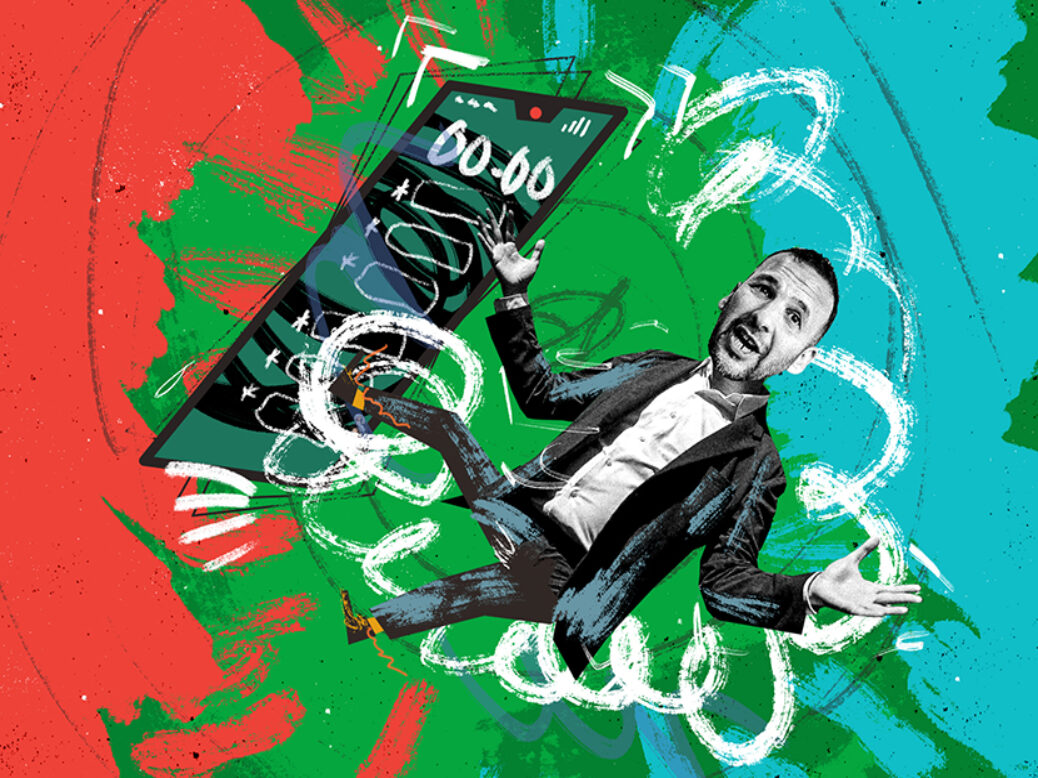
Zack Polanski’s latest appearance on Newsnight had been planned for weeks before he walked through the doors of New Broadcasting House on 28 July. But when the day finally came, the Green Party leader found himself in the eye of a political storm. Reform UK had reported him to the police for resharing a post on social media that, it was claimed, incited violence against the party’s leader, Nigel Farage. The post showed a man wearing a black T-shirt that featured a line drawing of a guillotine and the words, “We’re only making plans for Nigel.” (The Metropolitan Police has said it will take no further action.) In the course of the Newsnight interview, Polanski was asked three times whether he would apologise. Each time he refused. “If I’d done it deliberately,” he said, “I’d be apologising.”
This is not the first time this year that Polanski’s social media activity has got him in trouble. In May, he apologised to the police after retweeting a post that condemned their response to the attack in Golders Green, north London. In the past six months, other embarrassing revelations – such as him liking tweets criticising journalists unsympathetic towards the Greens – have also emerged. A close ally describes this latest incident as “a bit of a stinker”.
Unlike other political leaders, Polanski runs his social media accounts himself. One ally describes his style of online engagement as “hyper accessible”. Indeed, during the 2025 party leadership election, Polanski’s online communication style was a cornerstone of his platform and a key point of divergence between him and his opponents – two of the party’s more moderate MPs, Adrian Ramsay and Ellie Chowns. The Green Party is undertaking an overall review of its social media output, apparently unrelated to these incidents, and Polanski has made a commitment to be “better” on his social media.
Being “hyper accessible” clearly has its flaws. “This is just another example of him having to get off his phone,” one source tells me. With the party now seen as a serious electoral force, and under more scrutiny as a result, another source describes the post as a “reckless kind of carelessness we cannot afford”.
Both Chowns and Ramsay have publicly said that if they were in Polanski’s position they would have apologised. Green insiders push back on the idea that this constitutes a substantive split between Polanski and the two MPs. One insists that it merely reveals how differently they “interact with social media”. But the disparity between the two responses does reveal a more fundamental internal tension that the party is navigating: how aggressively should it pursue its new brand of Polanski populism in response to the rise of Andy Burnham?
The new Prime Minister already appears to be appealing to progressive voters such as those who voted for the Green Party’s Hannah Spencer in the Gorton and Denton by-election in February – the one that Burnham was blocked from standing in. Despite throwing all of its organisational heft behind the recent campaign for the mayor of Greater Manchester, the Green Party’s candidate, Geraldine Coggins, won just 12 per cent in the election on 30 July – a world away from Spencer’s victory (40 per cent). The party is coming to terms with the idea that replicating the success of Gorton and Denton might not be so simple against the new Labour leader. Polling suggests the Greens have suffered a two-point drop in since Burnham entered No 10. The awkward question for Polanski is whether the Green Party’s early successes under his leadership were more a reflection of dissatisfaction with Keir Starmer than of active support for him.
Internal opinions vary as to how the Greens should respond to the so-called Burnham bounce. According to one source, their MPs are mostly of a mind to wait for the return to parliament to see how events play out – and to be less obstructive of the Prime Minister’s more progressive policies. Others want to take a more antagonistic approach, calling out Burnham on issues such as defence spending and the UK’s response to Israel’s actions in Gaza. The recent motion calling on Labour to oppose increased defence spending, endorsed by Greens Organise – the faction that backed Polanski’s election – is one such example.
As one insider says, the party cannot be complacent in the face of Labour’s resurgence: “Burnham as Labour leader means the Greens are no longer playing politics on easy mode – the party needs to get serious about power… This means neither green-hued Lib Demmery nor retro-Corbynism is going to cut it.”
In under two months’ time, the Greens will stage their largest ever conference at the Brighton conference centre. This will be the first time since Polanski’s election that the party’s new patchwork coalition will gather in person. There, its leadership and members will have to decide: what kind of Green Party do they want it to be?
For now, the party is still rallying around Polanski’s eco-populism. Under his leadership, membership has more than doubled and the Greens have been taken more seriously as a left-wing contender. Still, the glow is beginning to fade. His internal critics are becoming more vocal. But though the limitations of his leadership are becoming more apparent, Polanski does not have a natural successor. Until that changes, the Green Party’s fortunes remain inextricably tied to him.
[Further reading: Has Zack Polanski reached his peak?]