
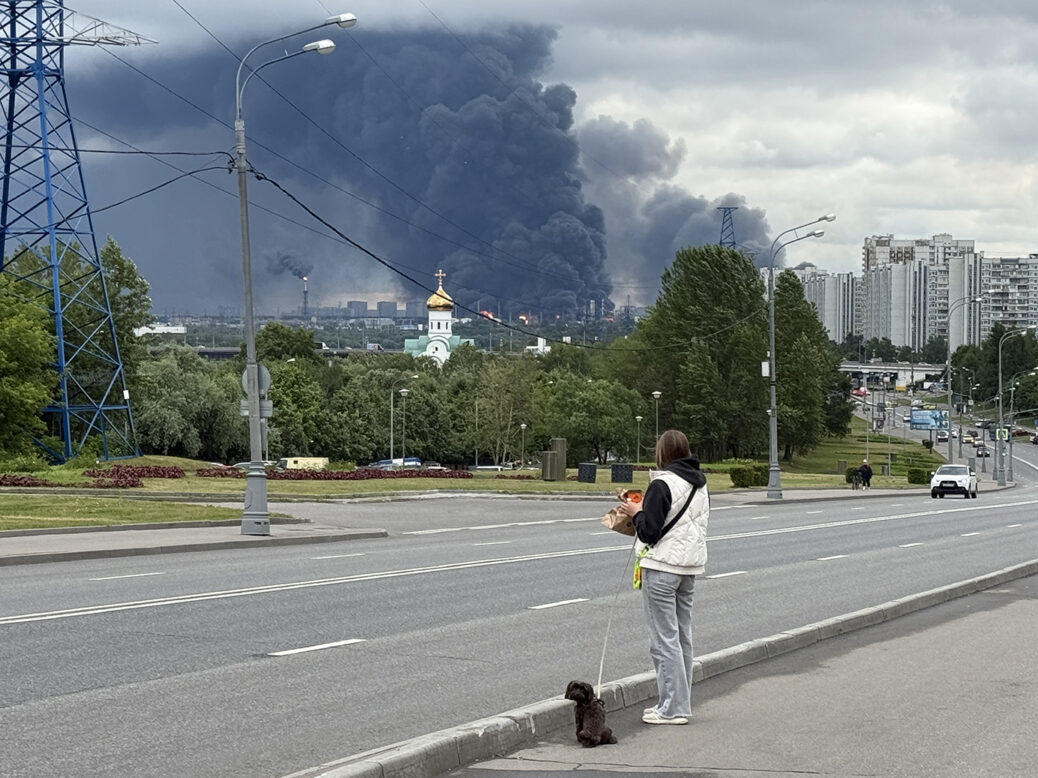
Russia’s oil refineries, the cardiovascular system of its domestic economy, are burning from Moscow to Siberia. Ukrainian drones – cheap, dispersed and precise – have turned Russia’s enormous size, which secured so many past victories, into a strategic liability. Long lines stretch at the gas stations and the black market petrol price in provinces now runs two or three times the official rate. Over the past few days, three logistical centers that supply Moscow’s residents with consumer goods and its military factories with Chinese components were set on fire.The purpose of Putin’s “special military operation” – a PR tactic designed to keep the war’s front concealed from its rear – has failed completely. Putin’s biggest bet – his mysterious friendship with the US President – has started cracking: at the Nato summit in Ankara last week, Trump praised Zelensky and seemed impatient with Russia. Nuclear threats are failing, too: Beijing has instructed Moscow in “an ultimatum-like form that there can be no thought whatsoever of using nuclear weapons”, European leaders told Zelensky in Ankara. Four and a half years into a war Russia expected to win in days, Ukraine’s military victory still lies ahead, but Russia’s defeat is already decided.
War – any war – is mass murder, political failure, and moral catastrophe. The Nuremberg tribunal called military aggression “the supreme international crime” that contained all the evil it subsequently caused. For the sake of current and future generations, everyone – in schoolrooms, at the ballot box, and in the corridors of power – should know that starting a war leads to punishment. War is also a fast and reliable judge of which societies actually work and which do not. Peacetime can hide institutional rot for a generation; war exposes it in months, and it punishes those responsible – not only the leaders, but the institutions. These are two forms of responsibility for war, and they complement each other: the personal responsibility of leaders, and the institutional responsibility of the state. War decides both on the battlefield prior to the debate in the courtroom or the conference room.
Subscribe to read the full article. Change Browser if you are already subscribed.