
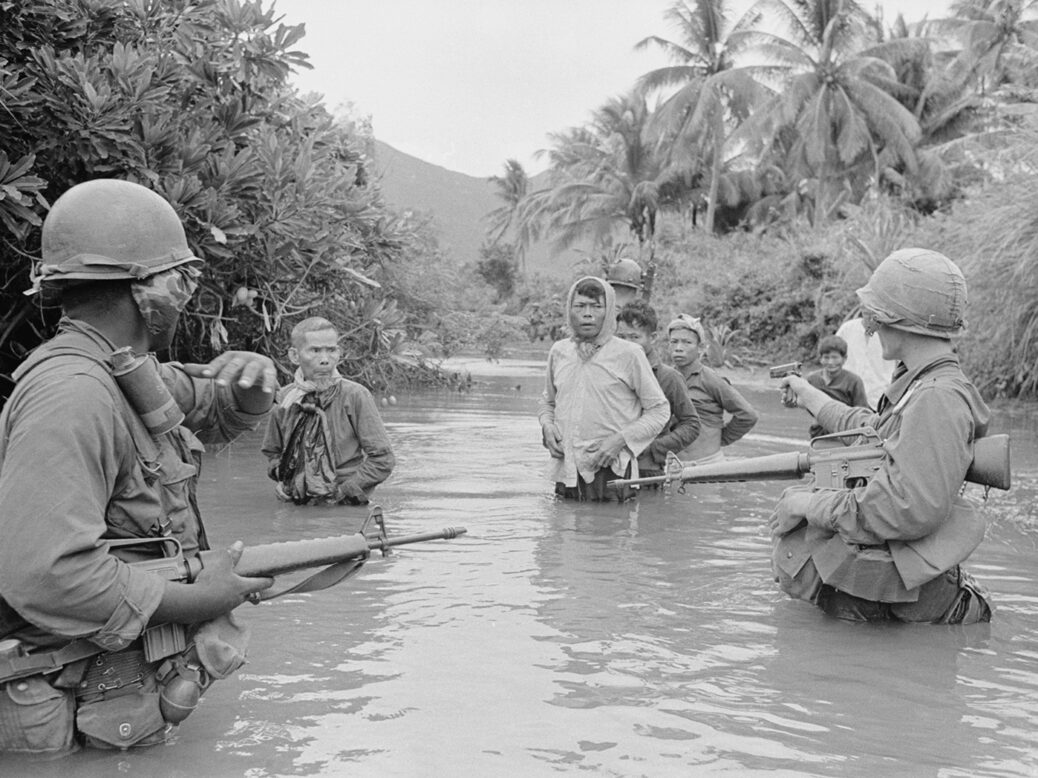
Of all the comparisons Donald Trump might have chosen, none could have been more alarming than the Vietnam War. In a press conference in the Oval Office on 13 July, the president was asked whether bombing Iran is the new normal for Americans, to which he replied: “Well, you know, we were in Vietnam for 19 years – we’re here for four months.” Of course, the war in Vietnam was never supposed to last that long. The mantra was always “just one more year, one more battalion”, even though the staying power of the US military was no match for the Vietcong.
David Halberstam’s The Best and the Brightest is the classic account of how America’s top minds – so convinced of their statistical models, their righteousness and the omnipotence of the US military –blundered in to the most divisive American conflict since the Civil War. Halberstam charts how dissent within the government was hushed up and optimistic statistics were fed up the chain of command. The monstrous scale of American cognitive dissonance during this time is laid bare in George Packer’s biography of the diplomat Richard Holbrooke, a figure who seems to capture so much of the tragedy of American power. Holbrooke arrived in Vietnam another Quiet American inadvertently upending the world, full of naivety, only to be horrified at what he saw – and he determined to speak truth to power on his return. And yet, he ended his career where he began, dealing with another US adventure – this time in Afghanistan – convinced of the righteousness of his mission.
Subscribe to read the full article. Change Browser if you are already subscribed.