
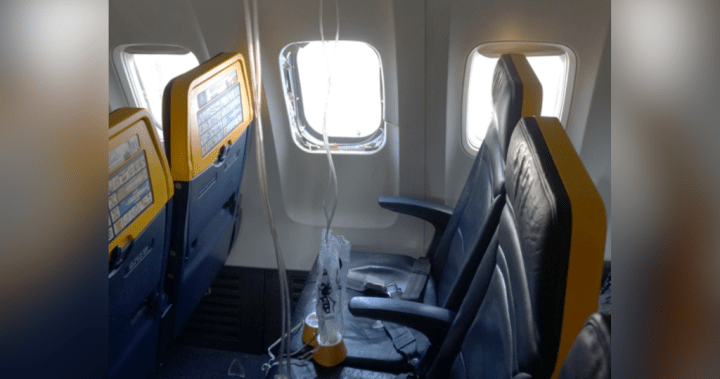
Ryanair flight 1879 suffered a catastrophic engine blade failure shortly after departing Thessaloniki on 10 July. The broken blade punctured the fuselage, shattering a window and exposing a passenger to the slipstream.
Incident details
The National Transportation Safety Board (NTSB) released a preliminary report that attributes the breach to a fan blade that detached from the right‑hand engine. Fragments ripped through the cabin wall, creating a hole that led to rapid depressurisation. Passenger Ljubisa Karović, 61, was seated in row 11F when the window gave way. His wife and another traveller pulled him back inside before he was fully ejected.
Karović sustained neck and shoulder injuries and friction burns. Cabin crew reported a loud bang, followed by smoke or fog and the deployment of oxygen masks. The pilots declared an emergency, reduced engine power and initiated an immediate descent, landing safely at the original departure airport.
Possible cause and maintenance record
Investigators found bird remains inside the engine, suggesting a strike during take‑off, though the exact trigger for the blade failure remains undetermined. The aircraft's right engine fan blades underwent ultrasonic inspections in May 2026 and November 2025 with no damage reported. However, flight crews had logged four suspected bird strikes on the same engine over the previous year.
Implications for Canada
Transport Canada monitors incidents involving aircraft that operate in Canadian airspace, including the Boeing 737‑800 fleet used by Ryanair and several Canadian carriers. The event underscores the importance of rigorous bird‑strike mitigation and engine inspection programmes, areas that the Canadian Transportation Safety Board (TSB) may examine in future safety advisories.
Canadian airlines operating similar aircraft are likely to review their own maintenance schedules and consider additional radar or visual monitoring at airports with high bird activity. The incident also highlights the value of cross‑border cooperation between the NTSB, TSB and European safety authorities in sharing data on engine failures.
While no Canadian passengers were involved, the episode serves as a reminder that low‑cost carriers must maintain standards that match those of legacy airlines, especially when operating in congested European airspace that Canadian pilots and engineers frequently traverse on transatlantic routes.
Based on reporting by Global News.