
“Who’d be twit-twoo’d in a twig-bright, snappable I,” asks Daljit Nagra’s speaker in “owl”, disavowing the first-person pronoun. Here, as in most of the poems in his autobiographical new collection Yiewsley, Nagra prefers to use the second-person, “you”. Nagra’s earlier collections, such as the Forward Prize-winning Look We Have Coming to Dover! playacted different voices and speakers. But here Nagra takes a new sort of risk: to “begin again. Re-acquaint with your breath.” He abandons the long, exclamation-marked titles of his earlier work, starting afresh with brief, childlike names for his poems. Here Nagra replaces his characteristic long, exclamation-marked poem titles with simple words, uncapitalised: “lollipop”, “owl”, “marshmallow”. Small things open into big ones – an owl’s beak into a Concorde plane, a Lucozade bottle into catastrophe.
Even so, “I” is too much, too vulnerable. Nagra recognises its spotlighted pressure, the cross between vulnerability and whining that “I” encodes at its worst. “You” is as close as Nagra gets to his younger self; it contains the safety of accusation as well as some distance, the possibility of self-pity leavened with pointed anger towards oneself.
The collection’s “you” is also the “Yiew” of the place, Yiewsley, which is on the outskirts of London, where Nagra was born and which gives this book its title. Yiewsley flirts with being a kind of no-place – it’s associated with Heathrow, a gateway to Britain, but it’s also a no-place in the liminal way that all airports are. Its suburbia adds another dimension of hybridity, which fascinates Nagra. Yiewsley suggests yew and parsley, a natural haven. But the apparent pastoral dream of the opening poem “lollipop” (“no park drunks or fly-tipping”) is tempered by hints that its dreams may come to nothing, or not enough: “incomers… dream of bangles dressing the marital wrist”.
A note of uncertainty builds through the collection. Again and again we find the child-speaker in the moment of having done something wrong. In “Lucozade”, the speaker, a five-year-old boy, finds himself embroiled in broken glass and inter-caste politics – “what happens, she’ll say/when you let things slip through your hands”. In “rock”, the anxious boy escapes into the garden and apologises to every beetle he sees. Wrong moves are inescapable, built into the situation. As “rope” makes clear in its first line: “you’re always getting caught out”.
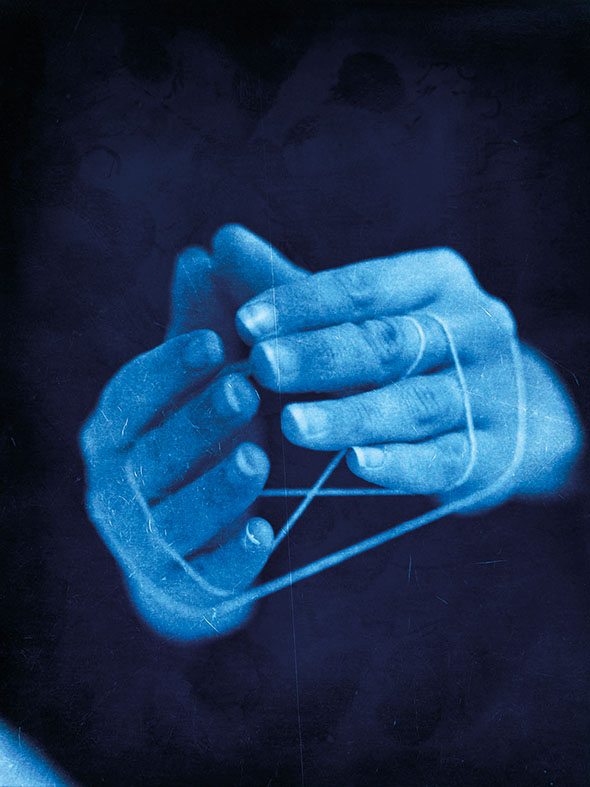
In “rope”, Nagra sets off one of the collection’s leitmotifs, the signature – a symbol for so many migrants of the transition into an English-speaking, bureaucractic society. The little speaker has filled out a form, for his grandfather’s new bank account – but the clerk needs a signature. The child doesn’t know what that is; the grandfather doesn’t know how to hold a pen. Humiliated, they leave; at home, the child is scolded. A signature signals your “I”, testifies: “I am here.” Nagra comes back to the signature later: asking a friend to explain it in “Nigel”, designing his grandfather’s signature and practising it with him in “suitcase”. With every re-inscription, the question tightens: does one want to be here, in England, in Yiewsley, in this situation, this family? Who or what is “I”? Where and when is here?
Love runs through Yiewsley, in its agonised no-shows and its earnest affection. “Nigel” name checks the beloved friend who reappears in the acknowledgements: “you knew he’d never raise his voice to shame you”. In “Bic”, love is more complex: once a month, the barely speaking grandfather turns his back to the child-speaker so that the grandson can shave off the hair with a Bic razor. That turning away transforms into a moment, at the poem’s end of turning towards: “your grandad’s back” (in the sense of: he has returned) – back in the poems that the speaker writes with a different kind of Bic. But mostly the speaker is left unseen. Mothers are angry, distant, exhausted: making roti late at night after a day’s work. It’s a lonely world. Letters are unread, pleas unanswered.
But the collection ends with joy. In the final poem, “cake”, Nigel’s mother turns up on the speaker’s tenth birthday with a cake, “just for you”. They sing happy birthday, “to which even your mum claps along”. “You”, by the end of this beautiful collection, ceases to be distancing or accusatory. It stands in witness to a child-self who was never quite seen. You.
[Further reading: Everyone wants to be Eve Babitz]