
When I was a new reporter, starting out in political journalism and shamefully unfamiliar with the country beyond my home city of London, there was one assignment I loved most of all. It was a regular slot where I would follow an MP around their constituency for the day, sitting in on their surgeries, interviewing them between appointments, touring their patch and watching them campaign, visit schools and meet local business owners and councillors.
This took me from Rochdale to Reading, Glasgow’s East End to Bath. But what struck me most were the moments in between. David Lammy scarfing a sandwich on the Overground en route to a sixth-form college after a session at the council. Gammon, egg and chips at a roadside pub with Ken Clarke. My interviewees would stop and chat to people in the street, ask their constituents how they took their tea, wander into someone’s house to feel the damp on the wall with the tips of their fingers.
I found these trips casual, chaotic. I watched schoolkids grill the health secretary’s parliamentary private secretary about whether he was on the organ donors’ register and why not, and a pained husband politely ask his MP to deport his troublesome wife. They also almost feel nostalgic to me now. Crumbs in the car, emergency tie in the glove compartment. Strip-lit church halls, nicotine-yellowed disco balls, polystyrene cups of squash. Wobbly trestle tables anchored with wedges of corrugated cardboard. Bus stops, retail parks, straining to hear someone’s money worries in a corner of the library while “Wheels on the Bus” echoed from the children’s section. Beep beep beep.
It was British shoe-leather democracy at its most cobbled together. I remember feeling proud that no one – other than smirking pupils under duress – would stand up when an MP entered the room. The raw-and-ready relationship of the public to its parliamentarians felt distinct from naff American reverence. For a long time, particularly since the expenses scandal of 2009, British politicians have been characterised by the media, many voters and even each other as “out of touch”, but this is how most of them spend their time every Friday, during recess and much of the weekend, too. They are remarkably close to the people they serve.
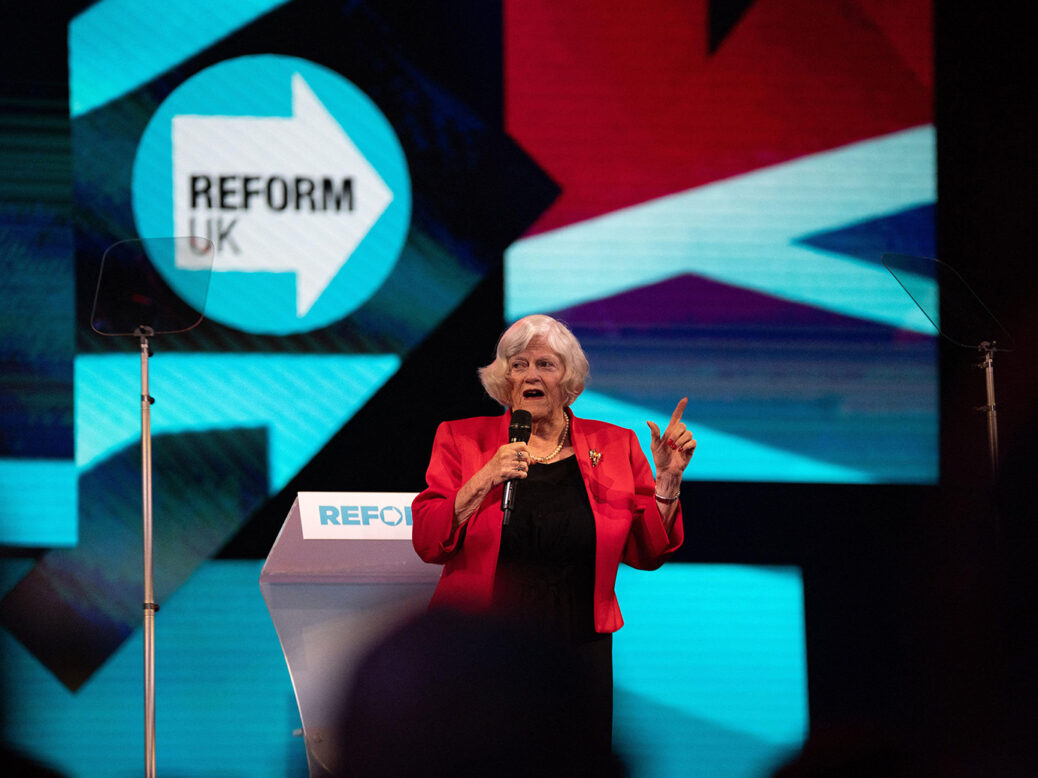
This is what we are losing, as the price for serving in our democracy is increasingly that of personal safety. We don’t yet know why Ann Widdecombe – a former Tory MP and minister and then a Reform spokesperson – was killed. But we do know, since the turn of the millennium, that MPs and their staff have been attacked and murdered at their constituency offices, surgeries and while going about their local rounds. And many more face rising threats.
Amid this intensity of intimidation and violence towards public figures, we are losing the British way of political life. It is now harder than it was nearly 15 years ago when I was doing those “on-the-road” interviews to work out when and where a constituency surgery will be, and how to sit down for a chat with your MP. Many won’t advertise locations publicly, and drop-ins are far less frequent; you’re more likely now to have to register for an appointment. Home visits are also becoming less common. There is police presence at some advice surgeries.
A Joint Committee on Human Rights report into the “rising tide of threat” against public officials in October 2019 found that constituents were seeing their MPs out and about less often. Some MPs had begun avoiding public transport, and when they did use it, tried not to engage with fellow passengers on the journey. Many had been advised no longer to hold their surgeries in libraries and village halls, where there wasn’t a sophisticated security system, or a quick escape route.
Perhaps it’s easy, even tasteless, for me to romanticise the DIY democracy of those constituency days. Spontaneous encounters with the public may reveal the true character of an MP, but they can also be degrading and demoralising – forcing them to become lightning rods for all government failure. After David Amess, the Conservative MP for Southend West, was fatally stabbed while holding a constituency surgery in 2021, one veteran ex-MP argued that professional caseworkers should focus on constituents while MPs stick to making laws.
But many politicians themselves feel something fades every time a new security consideration comes up. In the aftermath of Amess’s murder, I spoke to Stephen Timms – the East Ham MP stabbed by a constituent at his surgery in an east London library in 2010 – who told me he had refused to have a police officer on guard or a knife-arch metal detector at his surgeries following the attack. “I thought that would make the experience of going to see your MP such an unpleasant one that it would put people off, so I said no.”
In response to the “targeted attack” on Widdecombe, Reform has announced its plan to provide all 650 MPs and former politicians still active in public life round-the-clock protection. The proposal has been criticised as too costly; the number of ex-politicians, political campaigners and peers could mean an almost infinite bill. But the price tag isn’t the point. The true cost of increasing intimidation, threats and violence – and the security measures that could follow – is in the quiet everyday of democratic life.
[Further reading: Violence has infected our politics]