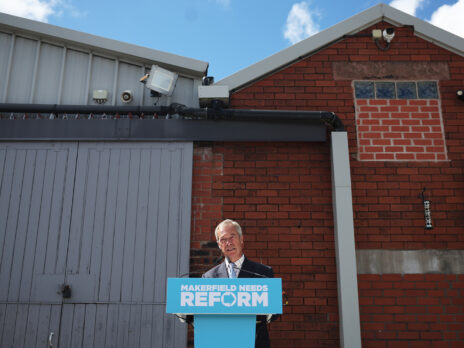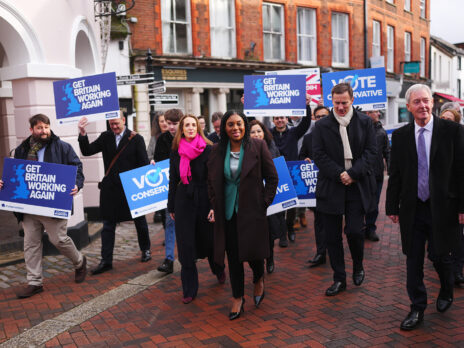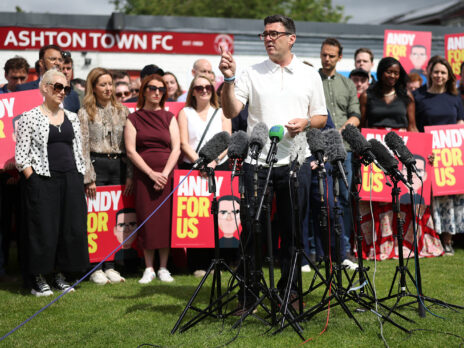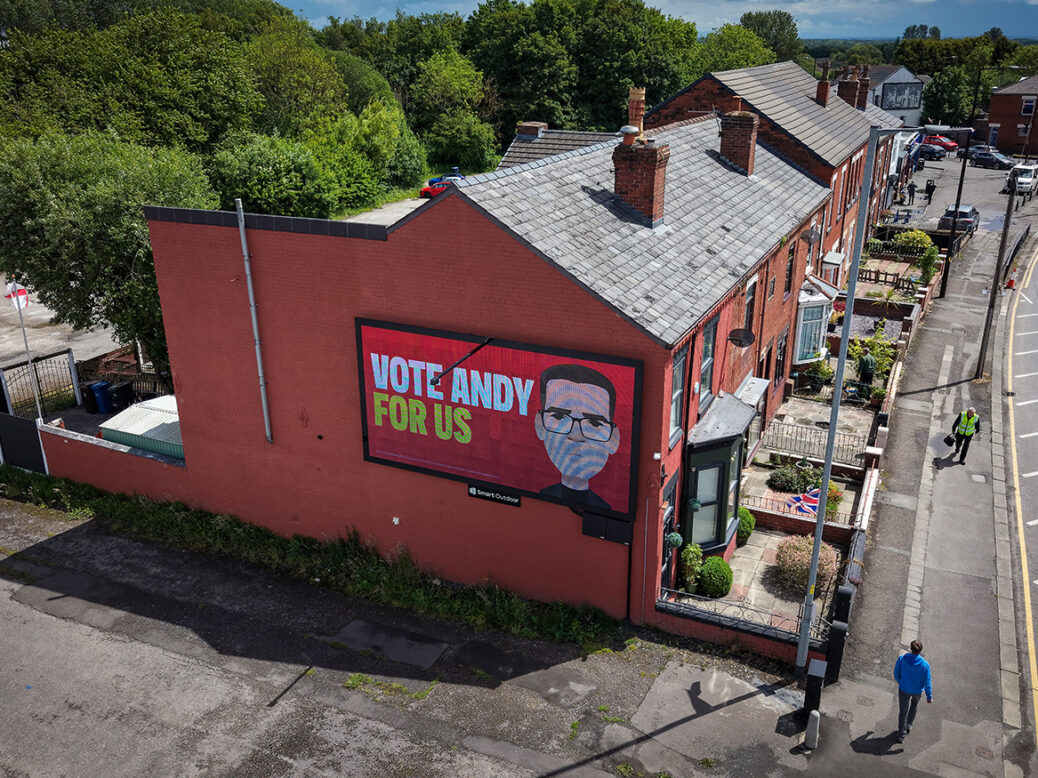
In his acceptance speech in the early hours of Friday, a victorious Andy Burnham sought to convince Makerfield’s wary, this-is-your-last-chance voters that he would not treat them as a “stepping stone”. No, he promised: they’d be a “touchstone”. He didn’t quite say “when I’m prime minister” out loud, but he vowed that as a direct consequence of electing him, there would be a “Makerfield test at the heart of British politics” which would “ensure the places Westminster has neglected will now get fairness.” Which is not something he can pull off from the backbenches.
This might sound like a recipe for perverse incentives – for decision-making that is narrow, parochial, or just straight-up confused. One area where Burnham faces criticism, for instance, is a lack of foreign policy experience: how is a Makerfield test going to help with the Iran crisis, delivering further aid to Ukraine, to take two examples, or dealing with Trump?
Yet there is a non-trivial risk, among those rolling their eyes at this idea, of being crushingly literal. Burnham clearly doesn’t mean that policy ideas will only be deemed to cut the mustard solely if they benefit his new patch – or if they play well in ex-mining areas, or the North West, or constituencies that are 97 per cent white. He’s talking about the many places “across the country who have been neglected, who feel that the country works for other people in other places but not for them”. As a source close to Burnham puts it, the test is to translate the political decision to stand and win in this particular seat into a broader test of policy, because the issues Burnham campaigned on “capture the ways our economy and state are broken” that must be fixed.
One reason we shouldn’t be too tram-line literal about the idea is that literalism – and its analogues, proceduralism and data-worship – are part of how we got to a point where Makerfield is anything other than safe Labour territory. It’s easy, moving between think tank paper launches, policy announcements and private briefings, to stop noticing just how off-putting it is to hear politics conducted in terms of metrics and rules. Who sat on the edge of their sofa watching the last election, fingers crossed, hoping desperately that Labour would get in…so we could achieve the highest GDP score in the G7? Perhaps Burnham the English Lit graduate grasps that politics needs to be conducted in metaphors and symbols as well as metrics and stats.
This kind of literalism is not just alienating because it is disconnected from the lives which politics is supposed to be improving. It’s also because it points to why that doesn’t happen. It embodies the way power is exercised, and who gets put first. It’s too close to the Treasury tendency to respect definite costs over potential benefits – to see the risk only of doing things, and not of failing to do them, leaving poorly-served areas neglected without even noticing.
Two months after the general election, Makerfield’s then newly-elected Labour MP, Josh Simons took part in a panel organised by the Institute for Public Policy Research – and said something I did not expect to hear from the ex-head of Labour Together, but which clearly came from what he’d heard from its residents as he campaigned. When economists and lawyers and civil servants tell MPs something can’t be done, he declared, the MP’s job isn’t to explain that to their constituents. It’s to ask, “but why can’t it?”
It’s not unreasonable that, in the absence of any other basis on which to make a policy choice in government, people cleave to what metrics or rules appear to suggest is the best decision. But it has proved politically disastrous. As he took office, Keir Starmer promised that he stood for “stability”, leading a “government unburdened by doctrine”. The fact that he has led a government unburdened by coherence – or indeed stability – is not an accident. Doctrine is stability. You need a north star, an overarching goal, or you leave yourself far too open to the blandishments of vested interests and their helpers in our thriving public affairs firms.
The Makerfield test is meant to be a clear, memorable signal that sticks in ministers’ and officials’ minds as they make difficult decisions, to ensure ordinary voters don’t keep getting put second, or worse.
All this will be nasty and messy and difficult, however. Burnham has talked a good game on hope and unity, but you can’t just will those into being with charm and exhortation. You have to fight out the underlying, unresolved power struggles. Ten years and two days on from the Brexit referendum, people voted once more to take back control.
Polling in Makerfield by Convergent and Steve Akehurst of Persuasion UK suggests that, as Akehurst put it on Bluesky, “among the Burnham coalition, strikingly, the top pro-[Burnham] quality was his platform on taking back control of public essentials.” Even beyond Labour voters, he notes, this speaks to voters’ feeling “buffeted around by forces out of their and government control.” A new report for the Common Wealth think tank by the sociologist Sacha Hilhorst and Megan Murphy, Popular Radicalism in Post-Industrial England, bears this out. It argues that among the main barriers to “the success of progressive politics” is the way that popular economic radicalism doesn’t always “align with real sites of excess profit-making”.
If Burnham is to respond to this – to what he described as Makerfield’s vote “for more power for the North”, for instance – it will mean taking power off people who don’t want to give it up. The Makerfield test will need to be a way to do that too: to equip uncertain, inexperienced ministers to resist the blandishments of lobbyists, to assert their power on behalf of the public, and say no.
The test may not tell him much about how to deal with Trump. As a way of sustaining the approach that helped him trounce Reform and Restore, however, it may help us avoid electing our own version. But it will not be a test that Burnham simply gets to apply to other people. Voters will apply it to him. Will he use it to drive a successful fightback against vested interests and those “sites of excess profit-making”? If not, we all know what’s coming.
[Further reading: Makerfield is Labour’s last lifeline]
Phil Tinline is the author of The Death of Consensus and Ghosts of Iron Mountain.
Content from our partners



Related