
The French talk about riches differently. In Anglophone countries we speak of wealth, from the Old English wela, which also gives us well and wellbeing. Our language equates being rich with health and happiness. In France they say la fortune; their language recognises that the rich are those who got lucky.
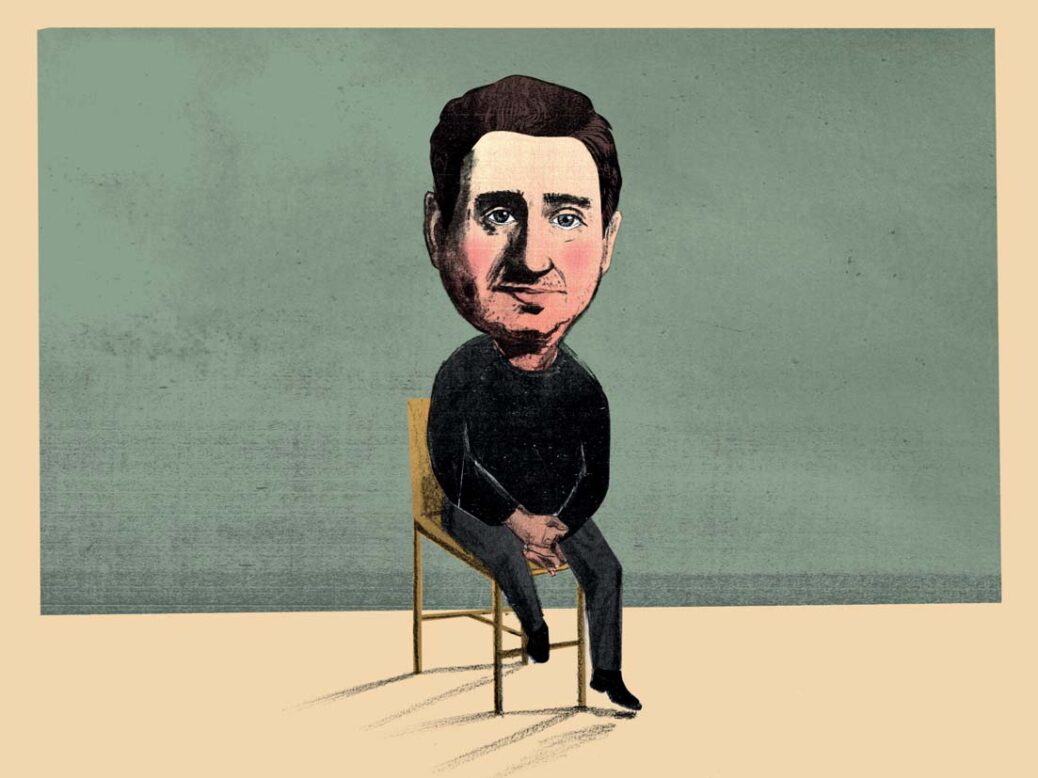
English-speaking economists pretend that their science is the dispassionate study of numbers, but it isn’t. Economics is politics with a calculator, and French economists, from François Quesnay to Thomas Piketty, have tended to recognise that the study of money leads naturally to some conclusions about who should have more of it. The 39-year-old economist Gabriel Zucman is very much part of this tradition and in recent years he has become one of the world’s leading advocates for wealth taxes. In a paper published earlier this month, he focused on the UK, which he argued could raise £10bn per year by implementing a 2 per cent wealth tax on “ultra-high-net-worth households” (those with “more than £100m in wealth”). Some of our politicians agree with him; he is a major influence on Zack Polanski, and he speaks to Labour MPs. Wes Streeting has said he would support the principle of a “wealth tax that works”. Andy Burnham, in an interview on 15 July, did not rule out a wealth tax.
Zucman was born in Paris, a city with a history of finding robust solutions to inequality. In his personal history, as he tells it, there are two significant events: the first was the 2008 crash, which he describes as an “intellectual turning point”. He was in his early twenties, a graduate of Paris-Saclay, one of France’s elite grandes écoles, and considering a career in finance or government when the crash took hold. “There was very little understanding of what was happening,” he tells me. He sought to make sense of the crisis by studying the immense flows of money into international tax havens. Then came the second turning point: moving to California in 2015. At the time, San Francisco’s Bay Area was undergoing what he describes as an “explosion of inequality”. He witnessed the technology workers and investors of Silicon Valley enjoying the vast riches of the post-crash boom, while in the same city thousands of homeless people slept in tents or huddled under bridges. “That really radicalised me,” he says. It made it “difficult, frankly, to study anything else”.
Zucman has studied the effects of wealth taxes for two decades. In 2013 he received his PhD from the Paris School of Economics, where he was supervised by Piketty. His research showed that the most common objection to wealth taxes – that the people affected by them will simply leave the country – was not supported by evidence. His work on the trillions held in offshore accounts formed part of the speech Bernie Sanders gave to the Democrats in 2016, and Elizabeth Warren consulted him before her 2020 Democratic Party presidential run. On a visit to London this May, he met with Polanski and (separately) with four Labour MPs in parliament: the former shadow chancellor, Anneliese Dodds, and backbenchers Yuan Yang, Sadik al-Hassan and Noah Law. At the London School of Economics during that same trip, he reminded an audience of economists (and fans) that the UK had once led the way on taxation – in David Lloyd George’s “People’s Budget” of 1909 – and could do so again.
In person he is softly spoken and affable, but when interrupted he presses on – the result of 20 years of arguing for wealth taxes against people who say they’ll never work. He says the principle that underlies his dedication to the policy is more legal than moral: “This is, first and foremost, about equality before the law.” What he seeks to address is not the government’s fiscal position (although an extra £10bn a year would be handy) but that the extremely wealthy aren’t subject to tax laws in the same way as the rest of us, because they can easily avoid paying income tax. Wealth is “much harder to manipulate”. You can hide your profits, you can decant your income into a holding company, but superyachts tend to get noticed.
Zucman’s new book, the bluntly titled We Need to Tax Billionaires, is a very short (65 pages) recipe for a 2 per cent tax on wealth, paid by anyone with a net worth of more than €100m (in euros because he originally proposed this tax in France). Other taxes paid by billionaires would be discounted against this amount, and states that imposed it would seek to collect the tax even if the wealthy headed abroad for Monaco or Dubai. The book also contains a warning: that the world is approaching a “tipping point” towards “plutocratic collapse”. I ask Zucman how close this point is. He says there are signs it is already under way, at least in the US: Donald Trump (the first sitting president to sue his own government) recently secured an agreement in which the US tax authority is “forever barred and precluded” from investigating his past tax filings or those of his family. Zucman says this is indicative of “the very quick and extreme capture of the federal government by autocratic interests” in the US.
In Zucman’s lecture at LSE he presented graph after graph showing the extreme concentration of wealth since the 1980s. Wealth inequality fell during the postwar decades as growth, housebuilding, cheap energy and progressive taxation brought incomes closer together, but the trend has reversed. At the end of the 1980s, the 200 richest families in Britain owned wealth equivalent to £1 for every £20 of our country’s GDP. Their wealth, relative to the size of our economy, has quadrupled since then, and is now equivalent to £1 for every £5 this country makes.
The graphs also show especially steep rises in inequality from 2010, during the era in which central banks tried to stimulate economies with very low interest rates and quantitative easing, inflating asset prices across the world. This was particularly the case in financial markets; the value of the companies in the Nasdaq 100 index has increased by about 15 times since 2010. Do his charts show real wealth, or just inflated asset prices?
“Extreme wealth is never virtual,” Zucman insists. Elon Musk’s net worth (around $800bn at the time of writing) might sound like a made-up number from a frothy market, but Zucman says it becomes real money whenever Musk needs it to be: “He found $44bn to buy Twitter, and all of a sudden, this wealth became very real.” In the book he also outlines how Musk’s wealth bought “unfettered access to the corridors of power” in the US. In the UK, as the New Statesman has reported in detail, Tony Blair’s continued political influence is not unconnected to the interests of his financial backer, Larry Ellison (net worth $259bn).
What about the more terrestrial business owners that make up most of the UK economy? The UK has a “tax gap” between the money that could be taxed and the money that is taxed, which means the Exchequer receives £59.2bn less than it could. Wealthy individuals only account for 5 per cent of this. Most of the gap (60 per cent) is from small businesses. Isn’t this a more pressing problem? “You should do both,” Zucman replies. However, he said that taxing the very rich would be easier. The cash-in-hand economy is hard to pin down but billionaires are few, and visible. The UK already values and taxes people’s assets when they die (inheritance tax), so this is a well-established procedure. “Doing that on an annual basis, as opposed to [a] one-time basis… if it’s just on 1,000 taxpayers, it’s not particularly complicated.”
Even within this small group, however, there are significant differences. I give Zucman an example of a British company, listed on the London Stock Exchange, that is valued by the market at around £300m. Its profits are around £10m. The founder owns half of the company: she is therefore worth £150m, and her income will be £5m (half the profits). Under a Zucman tax, this entrepreneur would have to pay £3m (2 per cent of her wealth) to HMRC each year. To her, this “2 per cent wealth tax” would be financially indistinguishable from a 60 per cent income tax. It would probably also wipe out most of her ability to make new investments, and create new jobs.
“I think that’s OK,” Zucman says, for the reason that “the return on wealth, for extremely wealthy people, is around 6 per cent [from company profits]. So, on average, someone who owns £1bn is going to have £60m in income. And the tax would be £20m, and so that would be equivalent to an income tax of one third.” He would even support wealth taxes on those whose companies are highly valued, but who make no profit, as is the case for many AI firms. This would change how companies grow. In 1998, Amazon had a market capitalisation of more than $10bn but it did not make any profit until 2003. Under a Zucman tax, Jeff Bezos would have had to sell off a significant proportion of his shares as the company grew, to cover tens of millions of dollars a year in tax bills. Any founder who wanted to use capital markets to expand would have had to dilute their ownership of their company as its market value grew. No future entrepreneur would have the chance to get Bezos-rich, or at least not as quickly.
Many people would consider this possibility and quite reasonably think: yep, good, do it. But I put it to Zucman that this would result in significant changes to the financial markets in which most of the world’s retirement savings are invested. Your pension very likely contains shares in Amazon, Meta or SpaceX. I am no investment banker, but I can make a fairly confident prediction about what would happen to their prices if Bezos and Zuckerberg and Musk were compelled to sell off tens of billions of dollars’ worth of their holdings each year. Zucman disagrees, however, that his tax would reduce the market’s appetite for entrepreneurship or limit the values of companies. Under his tax, he says, billionaire wealth “would still have skyrocketed”. He says a very different ownership structure would make “zero difference” to the market value of a company like Amazon or SpaceX.
Does he think anyone should get to be a billionaire? “That’s a different question,” he says. “I do think that extreme wealth is corrosive for democratic societies, and I do think there is a fundamental tension between extreme wealth and the very possibility of a well-functioning democracy.” He asks me to imagine the current trend of wealth concentration, taken to its logical conclusion: a focusing of market until a single person, a global lottery winner, ends up a centitrillionaire. “We don’t want to live in a society in which someone, out of pure luck, owns 99 per cent of the world’s wealth. There would be no genuine freedom in such a world.”
Zucman’s plan for a wealth tax may be simple, but as he well knows, passing such a measure into law is complicated. Last year he proposed a 2 per cent wealth tax for France that was wildly popular with voters – one poll found 86 per cent supported the tax – but was rejected by legislators in October 2025 after other economists warned it could damage the economy. In the UK, chancellors reliably fall back on stealth taxes rather than trying to reform the dysfunctional tax system. Trump uses tariffs (imposed by executive order) to raise taxes without creating new laws. As Zucman’s proposal includes the idea that states would tax the very wealthy even if they fled to other countries, it would require not just domestic but international agreement, and possibly some form of capital controls.
When he talks about the defeat of the tax, his disappointment leans towards conspiracy. “The billionaires used the newspapers that they own in a very aggressive way to stoke fears, to make the debate hysterical.” He doesn’t have much evidence for this, although he says unnamed journalists told him that articles in support of the tax were spiked. “This will come to light, some day,” he says. This sounds to me a little like Trump’s war on the “fake-news media”. Is it possible that people simply disagree with him? “It was just impossible in any of those newspapers to read anything sensible or factual,” he says.
For many academic economists, a tax is something to be analysed and modelled rather than campaigned for. Most of the economists in our civil service are employed in the assumption that they keep their politics to themselves. Zucman says this is impossible and dishonest. “Taxation is the political and democratic question. It’s probably the most important one in our modern societies, in which we pool 30, 40, 50 per cent of our income together through the tax system. How we organise this sharing of resources is the fundamental democratic question. It’s not like you can have a purely technocratic take on how to do that.”
As wealth concentrates further, a paradox is becoming apparent: vast wealth is being generated, but also widespread poverty. I ask Zucman if he sees a parallel between the billionaire economy and what economists call the “resource curse” that afflicts some developing nations. When oil or diamonds are discovered, the sudden flow of riches creates opportunities for the seizing of power and as a corrupt elite takes hold, the economic growth that should have appeared goes missing. Many people are actually worse off. “There is an extreme wealth curse, yes,” he says. “It harms the social contract, and it harms democracy.”
[Further reading: Gary Stevenson: Ballooning billionaire wealth is a cancer]