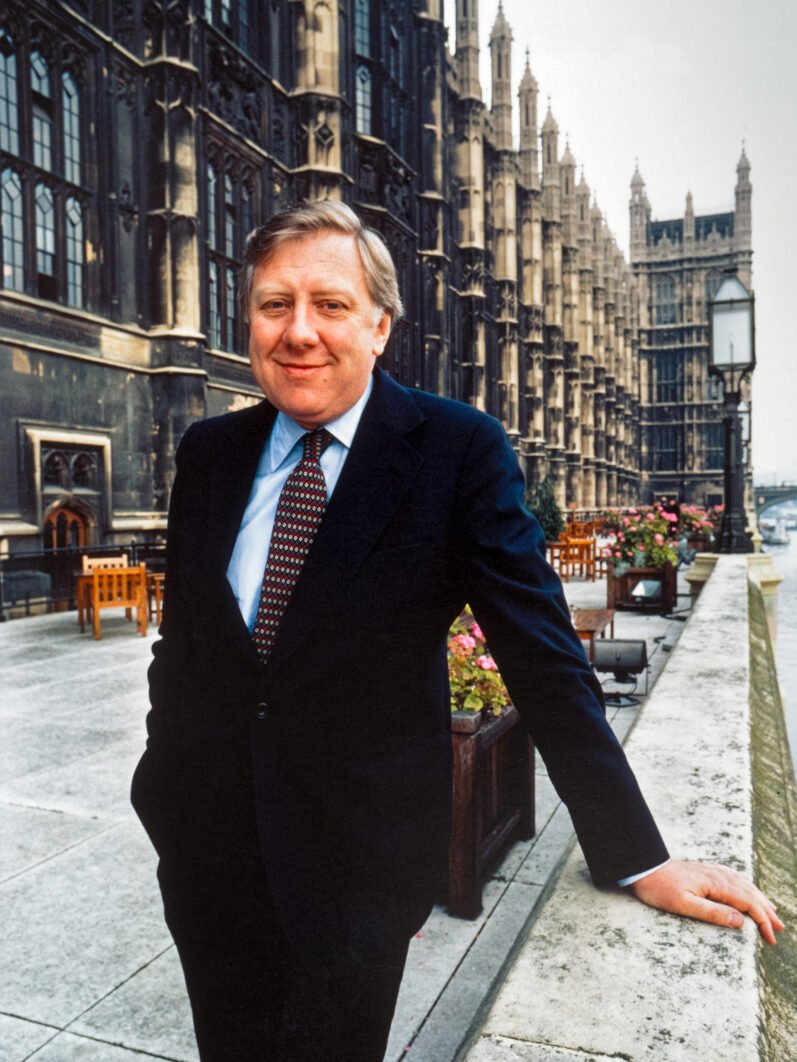
At the height of the Blairite New Labour era, Roy Hattersley observed that in the 1970s and 1980s he was on the right of the party, and now he was well to the left without changing a single view on any policy. Hattersley’s views had been fully formed and deeply thought through decades earlier. He flourished in an era where politics was shaped by a battle of ideas and convictions, becoming one of the party’s most significant and compelling postwar figures. He will not be especially remembered for his brief period as a cabinet minister in the late 1970s, when he was secretary of state for prices and consumer protection in James Callaghan’s government. (He later joked about the absurdity of waking each morning to decide the price of bread.) Yet Hattersley’s long career shows that politics is much more than fulfilling ministerial ambition. In books, articles, broadcasting studios and his pivotal role within Labour’s never-ending conflicts, he always conveyed a sense of ideological mission. Importantly, his arguments were made with vivacious wit.
Hattersley was connected to the Labour Party from childhood. His mother, Enid, was a councillor in Sheffield and became the city’s lord mayor. She was a star in her own right, appearing on television chat shows and displaying a similar mischievous exuberance to her son. Later, Hattersley discovered that his father had been a Catholic priest who renounced the Church to move in with Enid. Hattersley was a prolific novelist. He had plenty of material from his own upbringing.
He became an MP in 1964, when Labour returned to power after 13 years of opposition, propitious timing for a politician as ambitious as Hattersley. But the new prime minister, Harold Wilson, never fully trusted him. Hattersley was close to Roy Jenkins, whom Wilson regarded as a rival. Hattersley was also a different political species from the determinedly pragmatic Wilson. He was unyielding in his support for joining the common market and was one of those who joined Jenkins in voting for membership in 1973. Wilson and most Labour MPs voted against. On domestic policy, Hattersley was especially passionate about comprehensive education when Wilson was more equivocal. The Labour leader never made him a cabinet minister. Hattersley served in a series of junior posts until Callaghan finally elevated him in 1976.
Jenkins’s decision to vote in favour of joining Europe, against the wishes of most Labour MPs, was the start of his journey towards the formation of the SDP in 1981. Hattersley’s decision not to join Jenkins’s project was a key moment in Labour’s history. If he and the party’s then deputy leader, Denis Healey, had left for the SDP, Labour might well have faced a bigger electoral slaughter in 1983. Hattersley was alarmed and depressed about the state of Labour under the leadership of Michael Foot. Nonetheless, he concluded speedily that for all its deep flaws, Labour was still the vehicle best equipped to deliver the fairer and more egalitarian society that he passionately sought. Shortly before the 1983 election he visited Foot’s house in Hampstead with the intention of discussing how to make Labour’s pitch at the very least more polished. The meeting did not go to plan. Hattersley later revealed that they spent the entire evening discussing Coleridge and Hazlitt, two of Foot’s favourite writers. The anecdote is in his memoir Who Goes Home, the funniest account of a political life I have read.
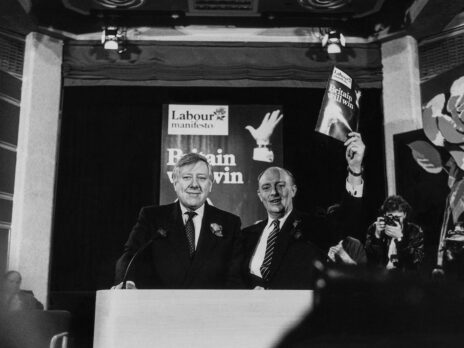
After the 1983 defeat, Hattersley became deputy leader. He had hoped to succeed Foot but was beaten easily by Neil Kinnock. This was part of the phase when he was seen as being on Labour’s right. The perception was accurate in the sense that Kinnock had come from the left, but Hattersley’s social democratic politics were far more textured and layered compared with some of those on the right of Labour now. He and Kinnock had a tense relationship at times. They also had much in common. Both were ardent admirers of the socialist thinker RH Tawney. “Hatters and I are both Tawneyites,” Kinnock once told me.
In the spirit of Tawney, Hattersley wrote his most important book while he was deputy leader. Margaret Thatcher had seized the term “freedom” to define her project. She declared with a populist zeal that she would set the people free from the state. In the late 1980s Hattersley wrote Choose Freedom, in which he argued the state was the agent of freedom. It was an attempt to acquire the most potent term in British politics for Labour, but the timing was wrong; with Thatcher winning landslides, few noticed. Even so, the ideas endure. The book is a big influence on the current Education Secretary, Bridget Phillipson, among others. Consciously echoing Hattersley, she cites the provision of good state education as the way to give pupils from all backgrounds the freedom to fulfil their potential. Hattersley’s ideas endure. He will continue to matter.
[Further reading: Wes Streeting on Keir Starmer’s “poor leadership, poor judgement and bad politics”]
Content from our partners


Related