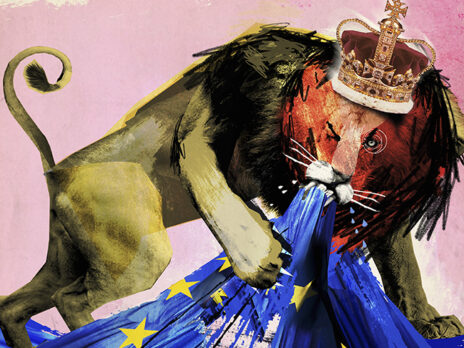
“I think we are looking at the end of democracy.”
That was the view of Judy in Bracknell as I tuned into BBC 5Live just just before Keir Starmer went to the Downing Street lectern.
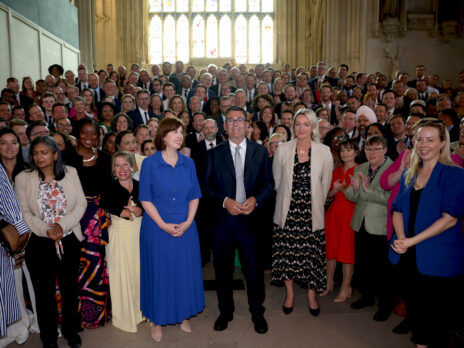
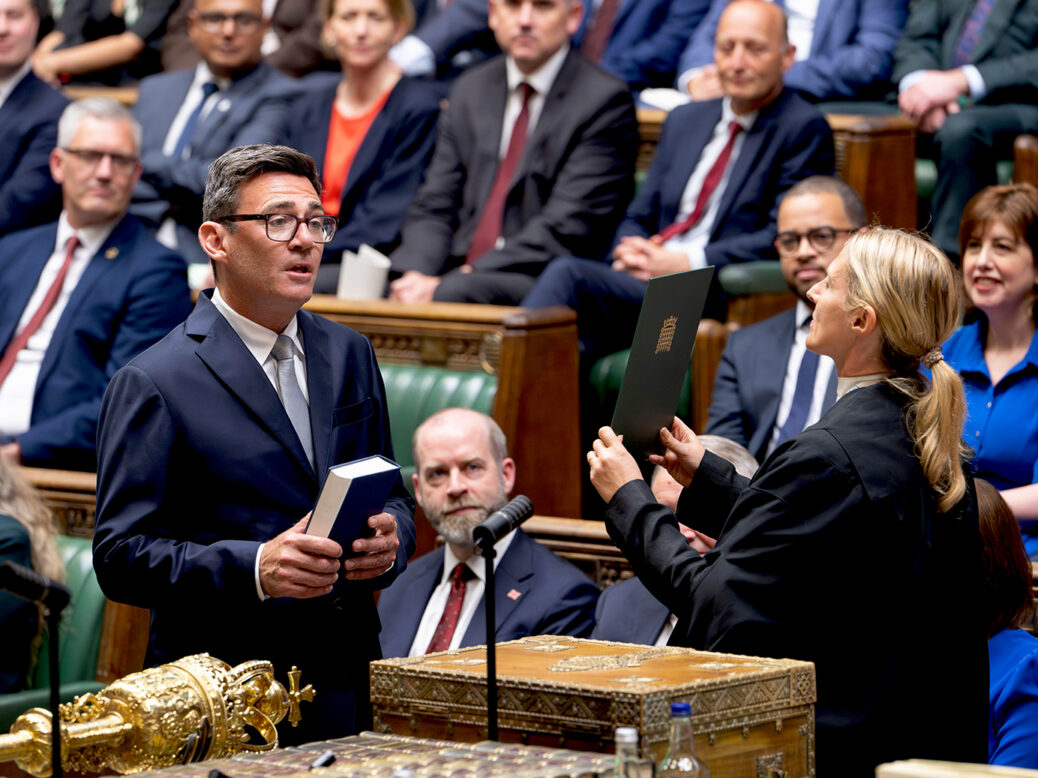
As Andy Burnham raced down to London on a delayed Avanti West Coast charger to assume the newly opened role of de facto prime minister, this concern for the future of democracy was on full display. With the news that Wes Steeting would be backing the self-styled King of the North rather than challenging for the Labour leadership himself, a “coronation” looked inevitable. The keys to No 10 would be handed smoothly from Starmer to Burnham without anything so messy as a contest, let alone an election.
It wasn’t the just the radio phone-ins, though these were full of outrage and confusion at the quirks of Britain’s democratic system. Social media was awash with horror at the prospect of yet another “unelected” prime minister. There’s always a tweet, as they say, and this time it came courtesy of Angela Rayner in October 2022: “The Tories have crowned Rishi Sunak without him saying a word about what he would do as PM. He has no mandate, no answers and no ideas. Nobody voted for this. The public deserve their say on Britain’s future through a General Election. It’s time for a fresh start with Labour.” Well, Angela, quite.
“Should there be an election?” asked polls on both the Express and Sun website homepages. The view of readers was not complicated: 92.7 per cent in the Sun and 97 per cent in the Express backed yes. Such online surveys are obviously self-selecting and not representative – and there is sadly no way of knowing whether respondents had the same enthusiasm for the public to have their say when it was Sunak awaiting his moment. Or Liz Truss. Or Boris Johnson. Or Theresa May.
But Joe Twyman at Deltapoll had helpfully crunched the numbers in a “here’s one I made earlier” poll from mid-May, when Burnham fever was getting overwhelming. He found that a less North Korean but still substantial majority – 63 per cent – of Brits thought Andy Burnham should go to the country in a general election if he became prime minister. That included 56 per cent of Labour voters. “I would imagine that public opinion would be broadly the same on those occasions whenever a similar situation has occurred in the recent past, regardless of whether it was a Conservative or Labour government,” he told me, when I asked if this was a Labour-specific phenomenon. Whatever their political persuasion, the public want a say.
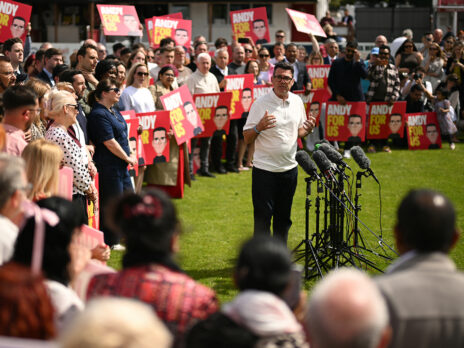
Which is awkward, because the British system of parliamentary democracy resolutely does not give them one. Rayner was wrong on at least one point back in 2022: Sunak did have a mandate, thanks to Tory MPs. The prime minister is appointed by the monarch on the basis of who can command a majority in parliament, not on whether anyone actually likes them. People bemoaning that Burnham looks about to become prime minister based on the support of just 25,000 voters in Makerfield are missing the point – it’s actually just the 403 Labour MPs whose voices count. There’s no such thing as personal mandate, at least not technically.
Is that undemocratic? Almost exactly four years ago in the wake of Boris Johnson’s tortured departure from Downing Street I found myself musing on what the ancient Athenians who invented democracy had to teach us about how we decide who rules us: namely, very little. “The Athenian ideal proved unworkable in its own time and would be delusional today, so how can you compare a president to a parliament, the party discipline of a first-past-the-post model to the splinter groups and compromises thrown up by proportional representation?” There’s no “pure” version of democracy. A prime minister chosen by MPs is no less legitimate than one who wins an election, not on paper anyway.
But that argument – the type you get in GCSE civics lessons or in debates about democracy’s classical roots – no longer chimes with the public. Blame social media that has brought our elected representative closer to us than ever before and fuelled parasocial fantasies about who they are and why they’re there; blame the Americanisation of UK politics and the way presidential vibes have contaminated both how politicians present themselves and what we expect of them; blame a basic tendency to demand a say, whatever the subject. As Joe Twyman pointed out, quite recently a substantial proportion of British adults thought they should get a referendum on Britain’s membership of the Eurovision Song Contest.
Whatever the reason, we want to believe our opinion matters. It seems wrong that someone can waltz into No 10 without bothering to even ask if we want them there. It might be democracy, the way it has been practised in Britain for the last few centuries, but it doesn’t feel like democracy. No wonder trust in our political institutions is declining to record lows. No wonder Judy from Bracknell is worried about the end of democracy.
Except that wasn’t actually Judy’s concern, as I realised when I listened to the programme in full. It wasn’t Andy Burnham’s election-less entrance to Downing Street that disturbed her – it was Keir Starmer’s election-less exit. What was the point voters choosing who would be PM for the next four or five years, she wanted to know, if they could be booted out of office part-way through without those same voters having a say?
Britain is about to get its seventh prime minister in ten years. Five of those six outgoing leaders were pressured into announcing their departure at a lectern outside the door of No 10 rather than losing a general election. The caller after Judy, Jeremy in Manchester, lamented that politicians are “effectively treating politics now like a reality TV show”, plotting about how to chuck people out of power as though it were a game. You can argue every single one of those leaders more than deserved to go. But the pattern is hard to miss. Of all of them, just one served the full term to which they were elected.
There are countless reasons why Keir Starmer has been forced to resign, and he certainly benefitted from the Tories’ rapid turnover of leaders. But in terms of Andy Burnham’s presumed coronation, perhaps it is just as undemocratic – or, at least, just as damaging to public perceptions of what is democratic – to lose another prime minister without an election in quick succession as it is to gain one.
[Further reading: The timeline: How Starmer lost control]
Content from our partners

Related