How did it all go so wrong for Keir Starmer? Over the following hours, days and weeks, Starmer’s supporters will make the positive case for his leadership. They will emphasise his role as a statesman abroad, his domestic achievements and his electoral success as Labour leader. This timeline, however, is an attempt to understand how the Starmer premiership collapsed.
4 July 2024: Ascension
Under Keir Starmer’s leadership, Labour won the general election after being locked out of power for 14 years. The party’s landslide parliamentary majority is the second-biggest Labour victory in terms of seats in the party’s century-long history and put Starmer immediately into the history books as one the small and select group of Labour leaders who have won landslide majorities alongside Clement Attlee, Harold Wilson and Tony Blair.
Despite the euphoria, some pesky psephologists and sceptical journalists noted that Labour’s share of the popular vote was one of the lowest it has ever recorded at an election and that the party benefitted from anger among Conservative voters who abandoned their old party by either staying at home or voting for the Nigel Farage’s insurgent party, Reform UK. The term “loveless landslide” was coined in the hours after the results were declared to describe the peculiar circumstances of Starmer’s victory.
23 July 2024: Suspensions
Seven Labour MPs had the whip withdrawn for six months after they voted with the Scottish National Party to remove the two-child benefit cap, a welfare ceiling introduced by Conservative chancellor George Osborne during the days of austerity. The move poisoned relations with the left of the party in the first month of the government, though many were already deeply sceptical of Starmer’s leadership from the opposition years. The move also shocked some moderates who remembered that suspension was not used to suppress dissent in this way the last time Labour was in government. Unease about this style of party management would slowly grow over the coming years.
29 July 2024: Winter fuel
Rachel Reeves announced a new means test for the winter fuel allowance, a payment of £100 to £300 made to pensioners in the colder months. The scheme was introduced by New Labour in its efforts to tackle pensioner poverty. Reeves sold the move as a tough decision, necessary to plug a “black hole” in the public finances left by her Conservative predecessors. The effective cut to the allowance for around ten million pensioners raised tiny amounts for the Treasury but came with a high political cost. Some in Labour worried that the new government was frittering away its honeymoon with unpopular measures and miserable rhetoric, a view reinforced a few weeks later when Starmer made his “Rose Garden Speech” in which he warned the future would be bleak and the forthcoming budget “painful”. Leading Labour figures, such as Wes Streeting, have since described the winter fuel allowance announcement as the “original sin” of the Starmer government.
September 2024: Teething problems
Over the summer there had been reports from inside No 10 of a power struggle between Starmer’s two principal advisors, Sue Gray, the senior civil servant who had left a long career in Whitehall to become his chief of staff, and Morgan McSweeney, the political strategist who had been by Starmer’s side since the beginning of his leadership campaign. At first, stories about the relative proximity to the PM of Gray and McSweeney’s desks in Downing Street seemed little more than gossip. But storm clouds were gathering.
In September the government was blindsided by a scandal over “freebies”. Information that had long been in the public domain about free gifts received by ministers was dredged up in an effort to question the integrity of Starmer and his colleagues. The criticism of Starmer was that he had made standards in public life one of his core principles as PM, and so was open to greater scrutiny than his Conservative predecessors. Dither and delay at the top allowed the story to roll on and details about the PM’s expensive spectacles caught the public imagination and began to damage Starmer’s image.
At this point, vitriol towards Gray within No 10 reached a fever pitch. The chief of staff was blamed for a range of teething problems for the new government: that the government’s “preparation for government” plans in opposition had been inadequate, that staff were not being well treated or paid enough and that the response to “Freebie-gate” was insufficiently nimble. The briefing against Gray culminated in the leaking of her salary to BBC News in effort to undermine her position. By the time of Labour’s conference in late September, Gray’s position had become untenable and she shortly after resigned, making way for Morgan McSweeney to become the PM’s chief of staff and his unchallenged main advisor.
A historian looking back on the Starmer premiership might identify a few sores here that would later turn septic as Labour MPs began to move against the Prime Minister. They would come to despise a culture of vicious briefing against colleagues from No 10, a habit of making subordinates take the blame for indecisiveness by the PM, and a slow, muddled response to scandals. This might also be the point at which the notion of the No 10 “boys club” gained currency. McSweeney, who rose to prominence in the wake of Gray’s downfall, would later become a bogeyman for Labour backbenchers unhappy with the direction of the government.
30 October 2024: The Budget
Labour’s first budget would come to encapsulate two of the government’s big problems: that it didn’t truly know what it wanted to do after inadequate preparations during the opposition years, and that it didn’t know how to effectively communicate what it was doing. At this first budget, Rachel Reeves raised £40 billion in revenue through a range of tax reforms in order, largely, to provide greater funding to the NHS. The package was sold to the public not as a budget for the NHS – a potentially appealing sell that would have focused on one of the party’s core strengths – but as a “Budget for Growth”, a wonkish and slightly abstract ambition. This opened up contested ground. Among the headline measures was a controversial hike in the National Insurance contributions paid by employers (but not employees) which critics warned would harm economic growth.
While the budget did much that Labour MPs were pleased with – raising the minimum wage, more money for schools and breakfast clubs – it also set up ugly fights with various interest groups, such as farmers, that later resulted in U-turns that diminished the authority of Reeves and Starmer. And the shape of the first budget brought home early the price of one of Labour’s big election gambles. In order to make electoral success more certain, political strategists around Starmer had managed to insert into the 2024 election manifesto a guarantee of no broad-based tax rises under a Labour government. This ruled out raising money through income tax, national insurance contributions or VAT under any circumstances. Whether this was necessary to win in 2024 is still a contested question. Previous Labour campaigns had been scuppered by smart Tory messaging about Labour tax rises, for example in 1992, and yet Labour won anyway in 2024 despite Rishi Sunak and Jeremy Hunt doing their very best to convince the public that Labour would raise taxes. By locking itself out of any way to quickly raise revenue through the big taxes, Starmer’s government was forced to make painful decisions in a range of areas.
Spring 2025: The U-turns
At the beginning of 2025, Labour’s honeymoon was definitively over and the party was struggling to maintain even a small polling lead. Reform UK had begun to consistently outpoll the Conservative party and some No 10 figures briefed that they expected Nigel Farage to be the true leader of the opposition going forward. In an attempt to capture the political momentum, Starmer and his advisers decided to focus on two highly contested political issues: immigration, which had increased to record levels under the later Conservative governments, and the welfare bill, which had also increased to record levels through the later Tory years despite delivering worse outcomes for recipients.
From early 2025, government insiders began to brief the papers that Labour would crack down on “welfare dependency” by cutting disability and incapacity benefits. In March the government produced a white paper setting out £5 billion of cuts, intended partly to increase the Chancellor’s fiscal headroom in the run-up to a difficult Spring Statement (difficult in part because of the negative knock-ons of President Donald Trump’s tariff measures). The package triggered a backlash from disability activists, progressive think tanks and a sizeable chunk of Labour backbenchers.
In May, Starmer turned his full attention to immigration, making a speech in which he warned that without heavier restrictions on inward migration, Britain could become an “island of strangers”. The speech was accompanied by a white paper outlining broad changes to visa and settlement rules intended to bring down net migration. Both the measures and the rhetoric of the speech provoked criticism from Labour MPs, who worried the government was trying to out-do Farage’s party in its anti-migrant rhetoric rather than making the case for the benefits of immigration. Some fixated on the “island of strangers” line, comparing it to language used by Enoch Powell.
Throughout this period, Reform UK continued to climb in the polls, moving into first place consistently by April 2025. Polling experts remain divided on the exact reasons for the party’s rise, but the fact that the crossover occurred during a period when the government was concentrating its fire on immigrants and welfare claimants would begin to form the basis of a growing critique of No 10’s political strategy from Labour backbenchers: that the party was abandoning some of its core voters in a vain and doomed attempt to win over Reform supporters. In early May, Farage’s party won the English local elections and also the Runcorn and Helsby by-election. While the party won the seat by just 6 votes, the smallest margin in modern British by-election history, it had managed to overturn a large Labour majority just ten months after a landslide election win.
By the summer, Starmer had abandoned his planned welfare cuts after insurmountable opposition within the Parliamentary Labour Party became apparent. He also apologised for his “island of strangers” comments, U-turned on the winter fuel allowance cut of the previous summer and indicated that he would consider lifting the two-child benefit cap despite suspending Labour MPs for advocating that position. Critics and supporters were united in their unease at Starmer’s ability to abandon positions which he had asked colleagues to defend to the hilt. This will likely be remembered as the maelstrom in which Starmer’s authority, as a Labour leader who had won a landslide, was destroyed.
September 2025: Reshuffle
As MPs returned from a summer of unrest on Britain’s streets, with protests and violence centred around asylum hotels, the government was hit by a series of unexpected shocks. The Daily Telegraph, after managing to obtain intimate knowledge of deputy prime minister Angela Rayner’s tax affairs, revealed that she had underpaid stamp duty on the purchase of a second home. Rayner resigned from government, though she was later cleared of deliberate wrongdoing by HMRC. Only a few days later, Starmer’s chosen ambassador to the US, Peter Mandelson, resigned in disgrace after the extent of his relationship with Jeffrey Epstein became clear from disclosures made by the US Congress.
Rayner’s departure required a reshuffle of some sort at the top of the government. This could have been a fairly modest change to replace Rayner at the Ministry of Housing, Communities and Local Government. But for months previously, there had been briefing to the papers from No 10 that a major reshuffle could happen and that various named ministers, most of them women, would be sacked or moved because of underperformance. Rayner’s shock departure provided the opportunity for such sweeping changes and Starmer took it, despite his diminished authority.
It is worth beginning with the list of people in the Labour party who were annoyed by the reshuffle: Angela Rayner’s allies, who were unceremoniously booted out of government along with their popular patron; Labour MPs from the north-west of England, who found their voice in government severely diminished; long-serving MPs who had supported Starmer through the years of opposition but found themselves passed over in favour of bright young things from the 2024 intake; leading welfare rebels who had helped the government to negotiate a peaceful end to the rows of spring and summer but were given no greater role to stop another calamity of the same sort happening.
The broad aim of the reshuffle was to centralise all control in No 10. It attempted not very delicately to destroy “power bases” by splitting junior ministers across multiple briefs and breaking up strong teams. By sacking Lucy Powell from cabinet, Starmer set up her campaign for the Labour party’s deputy leader role. Powell’s victory became a clear demonstration that the Labour membership was not happy with the direction of Starmer’s government. In retrospect this effort at political consolidation made Starmer even weaker in the long run. It gave large parts of the Labour Party no reason to think his carrying on as PM was in their political or professional interest. A prime minister doing well in the polls could have pulled it off. But it was a gamble too far for Starmer.
January-February 2026: Gorton and Denton
Starmer faced no easy options when the Gorton and Denton constituency came up for election after the resignation of Andrew Gwynne. The seat would be uniquely tough to win for a party that was being squeezed from the left and right by the Greens and Reform. Polling suggested the most plausible candidate was Andy Burnham, the Greater Manchester mayor, who made clear his intention to stand.
And yet Burnham had also made it pretty clear that he wanted to return to parliament to challenge Starmer for the leadership of the Labour party and replace him as prime minister. Starmer rallied the officers of Labour’s National Executive Committee and got them to block Burnham’s candidacy through the use of a administrative loophole. For the growing chorus of Starmer critics in Labour, the blocking of Burnham was the starkest example yet of the PM’s intolerance of internal party dissent and his desire to crush rather than persuade opposition, potentially even at the price of Labour losing elections. The subsequent and unprecedented Green win in the by-election saw the final realisation of the electoral threat to Labour from the left, warnings about which had been largely ignored by No 10 for a long time.
The Mandelson Affair, September 2025-?
The resignation of Mandelson as ambassador in September 2025 was embarrassing for the government but survivable. Jokes circulated about the misjudgement of appointing a Labour grandee who had twice resigned from Cabinet amid scandal. But the news agenda moved on. It wasn’t until early 2026 that “The Mandelson Affair” became a living nightmare from which there seemed no escape. The revelations kept coming. Mandelson’s appointment concentrated minds in the Labour Party as they asked – after nearly two years of missteps and U-turns – whether Starmer’s judgment could be trusted at all. The fallout led to all sorts of terrible damaging knock-ons. It led to the resignation of Morgan McSweeney who, though controversial, was nevertheless key in advising the PM and keeping his political project on track. The emergence of a vetting scandal led to Starmer hastily sacking the permanent secretary of the Foreign Office and making a futile war on Whitehall. It initiated the still unfinished process of the Humble Address disclosures, a painful drip of sensitive internal government communications. More broadly the Mandelson scandal was the prime example of the government asking MPs to defend the indefensible before backing down. It severely undermined Starmer’s main claims to leadership: that he was level-headed, decent and wise in his judgements.
The Reckoning, May-June 2026
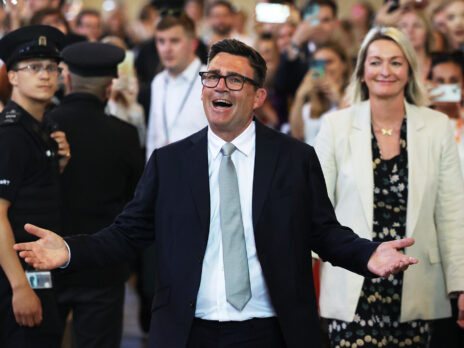
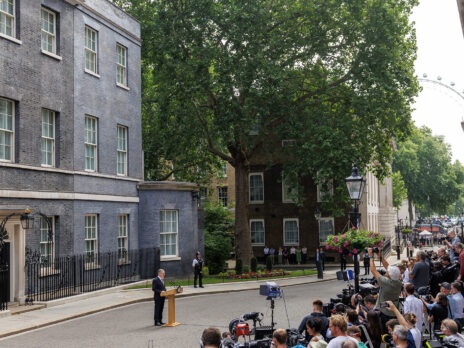
Months before Labour’s electoral disaster in May 2026, the party knew it was coming. But as party veterans warned less experienced colleagues, the sensation of being punched on the nose is a lot more bracing than the anticipation of it happening. So it was that all the bottled-up frustrations with Starmer were loosed in early May as the Labour party was smashed in Wales, Scotland and England. Nearly 100 MPs said what they had been privately muttering for months, that the Prime Minister had to go. Some cabinet ministers told Starmer the same. One, health secretary Wes Streeting, resigned saying he had lost confidence. The coup de grâce was dealt by Burnham, who engineered a by-election vacancy for himself in the Greater Manchester seat of Makerfield. That Starmer no longer had the authority to block Burnham from standing was perhaps evidence enough that his time was coming to a close. When Burnham managed to overturn Labour’s national unpopularity to win the seat by a whopping margin, he placed himself as the ready-and-waiting successor. Announcing his resignation, Starmer said he had heard the verdict of his party and would leave “with good grace”.
[Further reading: Thank you, Keir Starmer, next]
Content from our partners

Related