
If we are not blessed with great politicians, we at least have healthy ones. Reading histories of Clement Attlee’s Labour government is like reading a series of ward notes. Chancellor Stafford Cripps served part of his Treasury stint in a Swiss sanitorium and then resigned with colitis. Ernest Bevin, the foreign secretary, stepped down because of a dicky heart, then died a month later. His replacement, Herbert Morrison, struggled with chronic health issues, and his mistress, education minister Ellen Wilkinson, died of pneumonia. Biology caused by-elections more often than scandal did.
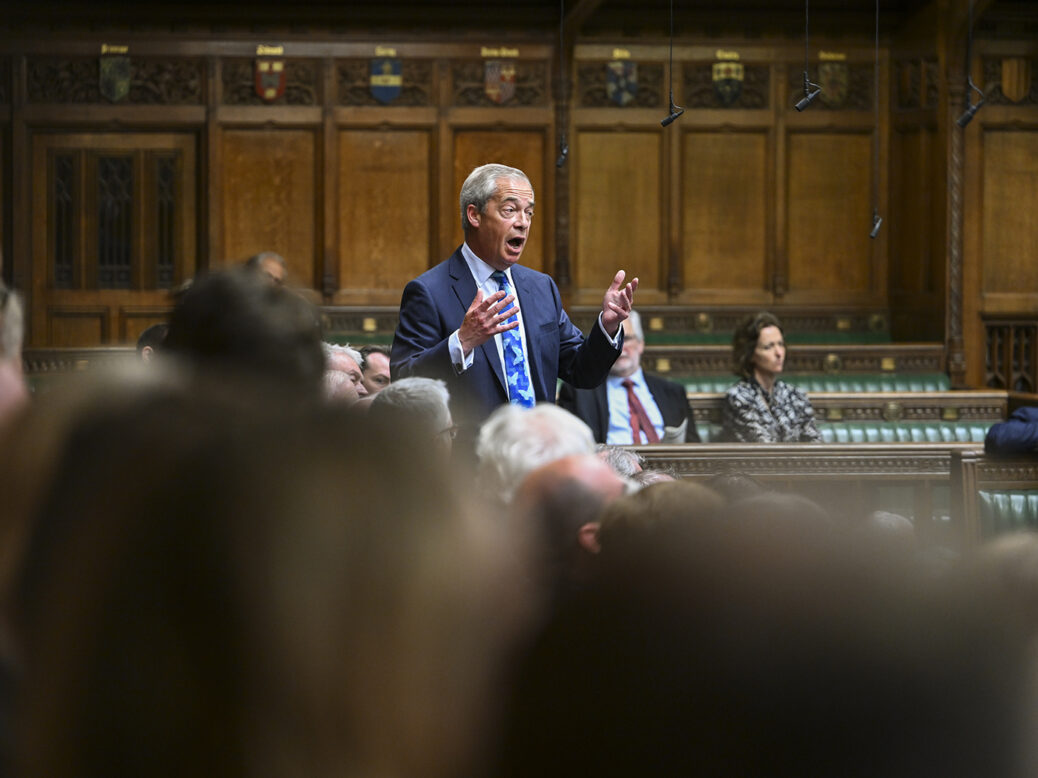
Thankfully, politicians don’t tend to die in office any more, and that gives our politics a bit of stability. Despite some of the darker chatter in Westminster about Nigel Farage’s age and unhealthy lifestyle, he will lead Reform into the next election with the intention of winning. The election could come sooner than its 2029 due date. It’s all getting a bit serious. Labour has enough to worry about. How can the Tories avoid oblivion?
There are a handful of reasons for optimism, say Tory MPs as they muster faded smiles in the Commons bar. Labour went from total disaster in 2019 to triumph five years later. Why can’t they? The public has shorter political memories than the pundits realise, they argue. Fair enough. Westminster is a place where people will straight-facedly say things like: Ed Miliband can’t become the PM now because he lost in 2015. Walk down a street and ask a stranger if they can remember who lost the Labour Party an election 11 years ago.
Next, the Tory MP will tell you: we have the money, the resources and the brand. All three are admittedly damaged. But in an emergency – economic, constitutional – the public will return to the Tories as the break-glass option. Then they go on: we are more palatable than Reform. While Farage is scary, radical and unpopular, the Tories are a known quantity that liberals can live with.
Convinced? Me neither. But the point is this: it’s enough to keep their hopes alive. Back in September, the polling group Merlin Strategy surveyed 4,000 voters on the state of the Tory brand. I hear the results found their way to Kemi Badenoch’s office. The numbers, seen by the New Statesman, were dire. Some 56 per cent said the Tories would make the same mistakes as last time if they got back in, 52 per cent that the party had no plan. Their top three reasons for not voting Tory were weak leadership, its poor record on public services and broken promises on immigration. It was said not to be on the side of small business, renters and young people – key constituencies these days, with Reform now biting into the once reliable boomer vote. Admittedly, this was before Mandelson, before Badenoch’s promise to slash business rates, before her latest bold move on student loans. Her fans say she is moving in the direction of the voters. They talk about a “Kemi bounce”.
Meanwhile, the parties of the right have been converging in policy terms. Farage dumped his unfunded tax cuts last year, while Badenoch reciprocated by following his lead on leaving the ECHR and trashing net zero. Until last week, the only big remaining policy differences were that the Tories were more right-wing on welfare, pledging to restore the two-child benefit cap, and more authoritarian on online safety, calling for a social media ban for children. Now Robert Jenrick has come in as “shadow chancellor” and matched them on restoring the two-child cap. Might a social media ban pledge be next from Reform’s new “shadow education secretary” Suella Braverman, who just happens to have been a key proponent of the Online Safety Act under the last Tory government?
This convergence is not the beginning of a future coalition of the right. The two parties are essentially in an arms race. As a Tory MP put it to me, the stakes in this fight are higher because while Labour only ever wanted to take Tory marginals, Reform is coming for the whole of blue Britain.
As “shadow chancellor”, Jenrick has been given a remit to “be boring”. When he joined Reform, I’m told, there were still people in the party who questioned the existence of the Office for Budget Responsibility. He put a stop to that. One Tory jokes that Jenrick crashed out of the party condemning the record of the shadow chancellor, Mel Stride, then launched his new role with a speech that could have been written by Stride.
For months Farage has been henpecked by “stakeholders” – that is, Tory newspaper editors, business people, donors, the infrastructure that supports a successful right-wing party in the UK. They have been asking Farage who his team are and what his plan is. They wanted to know if he could be trusted to keep their money safe. The unveiling of that “shadow cabinet” was his best answer so far. “It dilutes the brand, but it’s a trade-off,” says a Reform source. “We don’t know how many Tories are too many.”
What’s the worst-case scenario for the right? The Tories are too flushed by optimism to disappear entirely; Reform morph into the Tories without the baggage. For this we don’t really have a precedent. In the SDP/Labour split, often cited for comparison, there were clear ideological divides between the two sides. On current trends, the Tories and Reform will head into 2028-29 fighting against each other on the same manifesto. If this carries on, the result of this arms race could be, as they said in the Cold War, “Mad” – mutually assured destruction. Will the “stakeholders” tolerate such an outcome – or demand a treaty?
[Further reading: The life and afterlife of Gordon Brown]
Content from our partners



Related


This article appears in the 25 Feb 2026 issue of the New Statesman, The Crumbling Crown