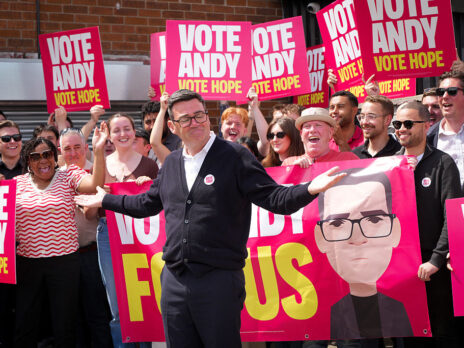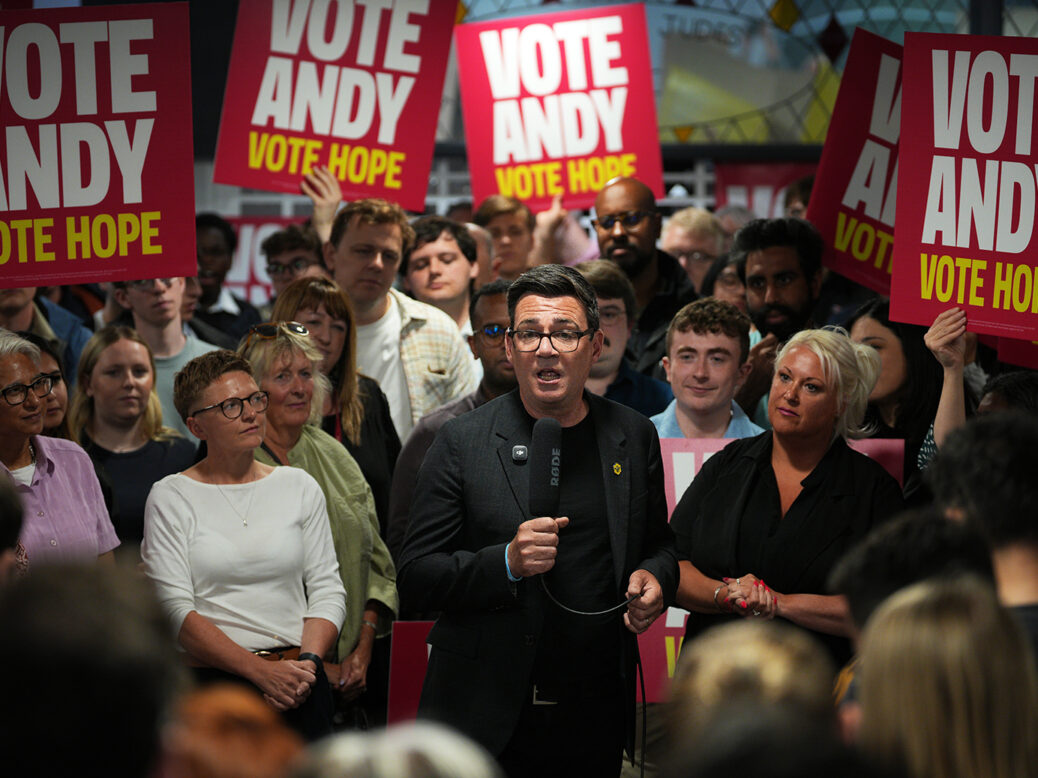
As far as the bond market is concerned, Andy Burnham chose a good day to win the Makerfield by-election. Politicians love to ascribe opinions to the market, but the fact is that the price of debt is mainly moved by inflation, which this week has moved in the right direction for Burnham: Wednesday’s inflation figure was lower than expected, and yesterday the Bank of England released a lower inflation forecast while keeping interest rates on hold. The market is more interested in the Strait of Hormuz than it is in Makerfield. As our political editor, Ailbhe Rea, revealed earlier this week, Burnham’s team had been concerned at the prospect of a surge in borrowing costs as the market opened at 8am, but eventually concluded that a win was priced in. They were right: gilt yields this morning shrugged upwards very slightly, as did European debt. The Makerfield result made no significant change to investors’ expectations.
Market participants say they are also trading on the assumption, or at least the strong possibility, that Ed Miliband – who has been advising Burnham on how to project fiscal discipline to the market – will become chancellor. Burnham has also brought in Andy Haldane, former chief economist to the Bank of England, Jim O’Neill (previously chief economist at Goldman Sachs and a Treasury minister under George Osborne) and Richard Hughes, former chair of the OBR, as economic advisors. These appointments appear aimed at establishing market credibility, but Neil Mehta, macro portfolio manager at RBC Bluebay Asset Management, said he sees this as “traditional, and almost Starmer-ish – I still expect Burnham here to come in and be a bit more revolutionary. Otherwise, what’s the whole point of his campaign?”
The market is currently fairly relaxed on Burnham’s position, having taken at face value his commitments to fiscal rules and manifesto commitments. But this is not the same promise he has made to voters, and to effect political change he will need to make changes either to how the UK borrows – such as extending the forecast period for borrowing, or separating defence spending from the fiscal rules – and the market is unlikely to view these changes kindly, because they would signal more borrowing.
At the same time, investors say Burnham’s abilities as a politician could also make a real difference. Mehta said that as a gilt investor, he’s keeping a close eye on Burnham’s favourability rating because one of the key risks is that Burnham and Miliband prove to be no more popular than Starmer and Reeves, and that they find themselves having to make more concessions “to get the public on side, to bring back some of the voters from the right”. If Burnham can increase Labour’s popularity as leader then he will have more leeway with voters, more power over his backbenchers and – as the market will see it – more fiscal control. “That will dictate how radical he’ll be, economically”.
For the moment, then, Burnham can enjoy his victory without the intervention of the bond vigilantes, but the market may have different views on the leadership race to come – how long it takes, how bitterly it is fought and, most importantly, the views expressed by the man poised to become our next prime minister. “Right now”, said Mehta, “the market is literally hanging on every word Burnham says on the economy and fiscal rules”.
[Further reading: Andy Burnham wins big in Makerfield]
Content from our partners



Related