
“How great was he, really? Filming with David Hockney ahead of his huge 2012 Royal Academy exhibition, I pointed out to him that he was, in a sense, taking on the greats of English landscape, Turner and Constable, in rooms they had once dominated. “OK,” he replied. “I’ll take them on.”
Hockney’s ambition was always vast. He was perpetually measuring himself against the greatest painters. Yet, he could also be modest, telling the writer Martin Gayford, “Most artists are going to be forgotten. That’s their fate. It might be mine too, I don’t know… It’s OK if I am; I’m not sure it’s that important.”
Having known many brilliant and determined people in my life, I feel I have only met one genius, and that was David. He was born in 1937, and from early childhood, when he dodged academic advancement by drawing all over his jotters, and would mooch about Bradford with his paints to the despair of his family, Hockney possessed an almost magical skill with colour and line. He was a natural drawer, in the same category as Rembrandt or Picasso.
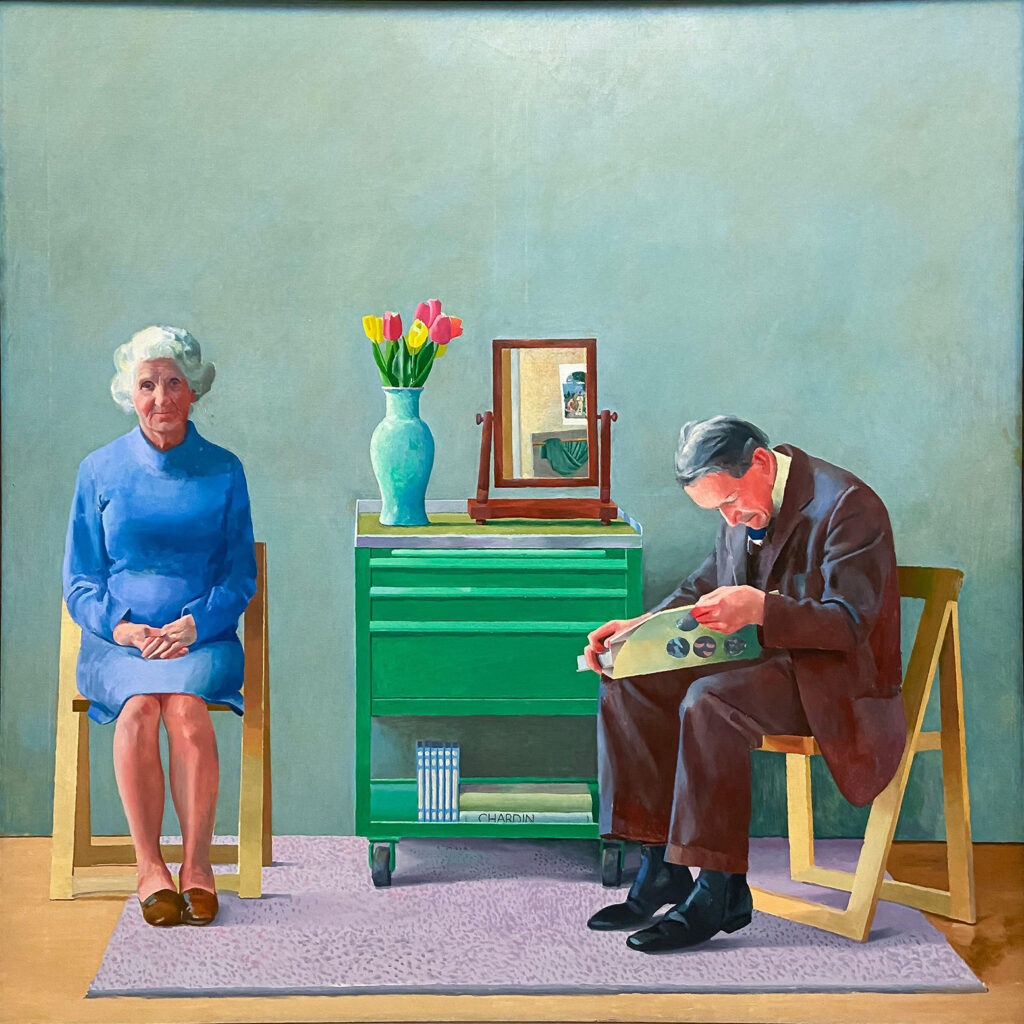
In an age of conceptual art, he always believed in the beautiful; he called some of his paintings an act of love. This would have taken him, slickly, to be a reliable painter of attractive pictures and good likenesses. But he had the ambition to take painting into new places, while at the same time refusing to join any movement around him. He wasn’t a pop artist, he wasn’t an abstract artist, or anything else. He was just himself.
This implies a heroic, or delusional, level of self-confidence. David was particularly interested in matters of time and movement, within and without the limitations of a fixed, silent picture. He wanted to paint time – to do this one thing that no one had been able to do before.
To that end, he threw himself into flurries of experiment, with Chinese and Japanese attitudes to perspective; photographic collage; reverse perspective, fax pictures, multiple-viewpoint film and iPad drawing. His most recent exhibition, at London’s Serpentine Galleries, of hundreds of coloured pictures of the seasons changing in Normandy, requires the audience to pace through it, walking faster than the seasons move yet consuming the images in movement.
I thought it was a magnificent success and told him so. He was very pleased. Some other attempts to capture time as well as space worked less well,though the best of the massive photo collages, and his paintings mimicking the constant flicker of the uncertain eye in space – particularly the interiors done in San Francisco – have changed the history of representation in art.
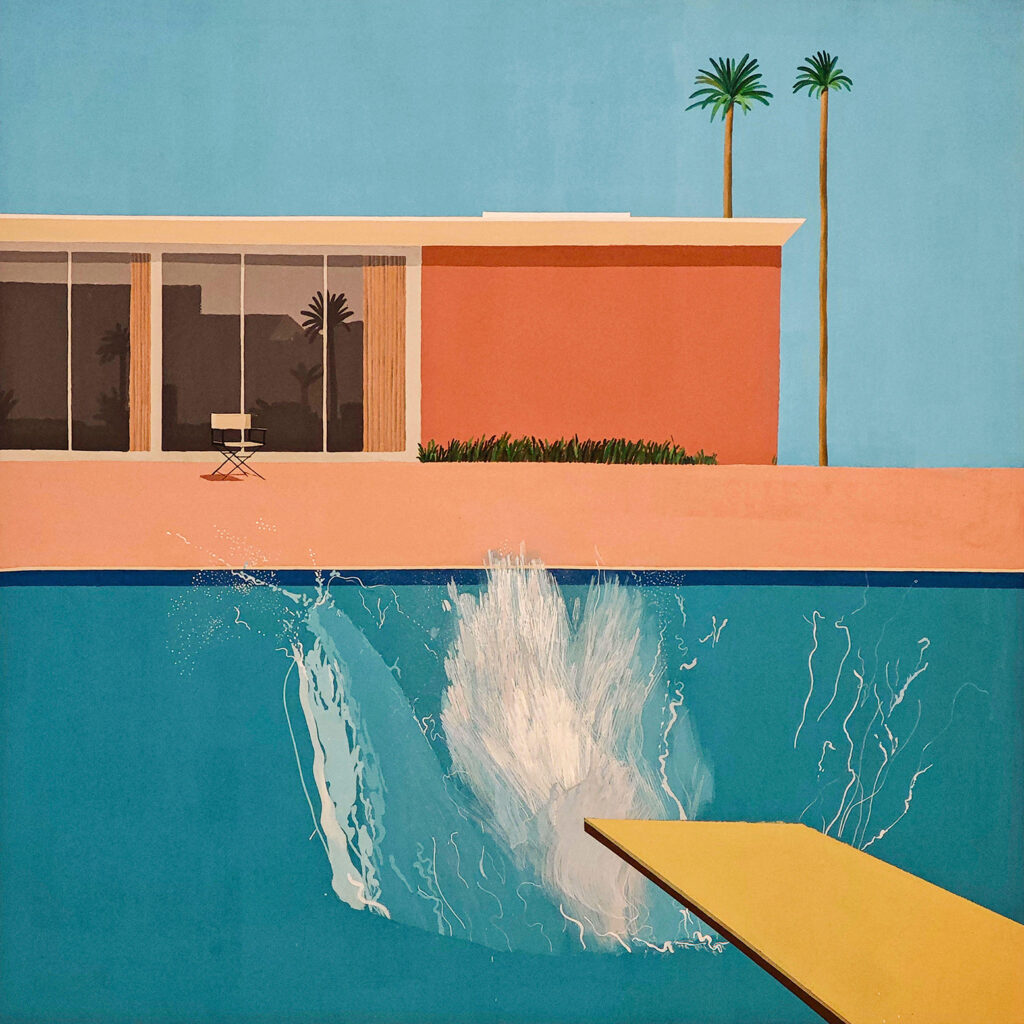
This huge ambition brought him real greatness. There was also the work ethic that went with it: he was working from first light to dusk, seven days a week, while reading deeply and widely and reflecting incessantly on other artists. Paradoxically it may have been masked by the mouthwatering, exuberant deliciousness of the images he produced on the way.
Where did the self-confidence, quietly bordering on arrogance, come from? Hockney’s father was an outspoken conscientious objector, anti-smoking campaigner and natural anarchist. David’s lifelong readiness to go his own way, and his mild contempt for authority, surely originated in Bradford.
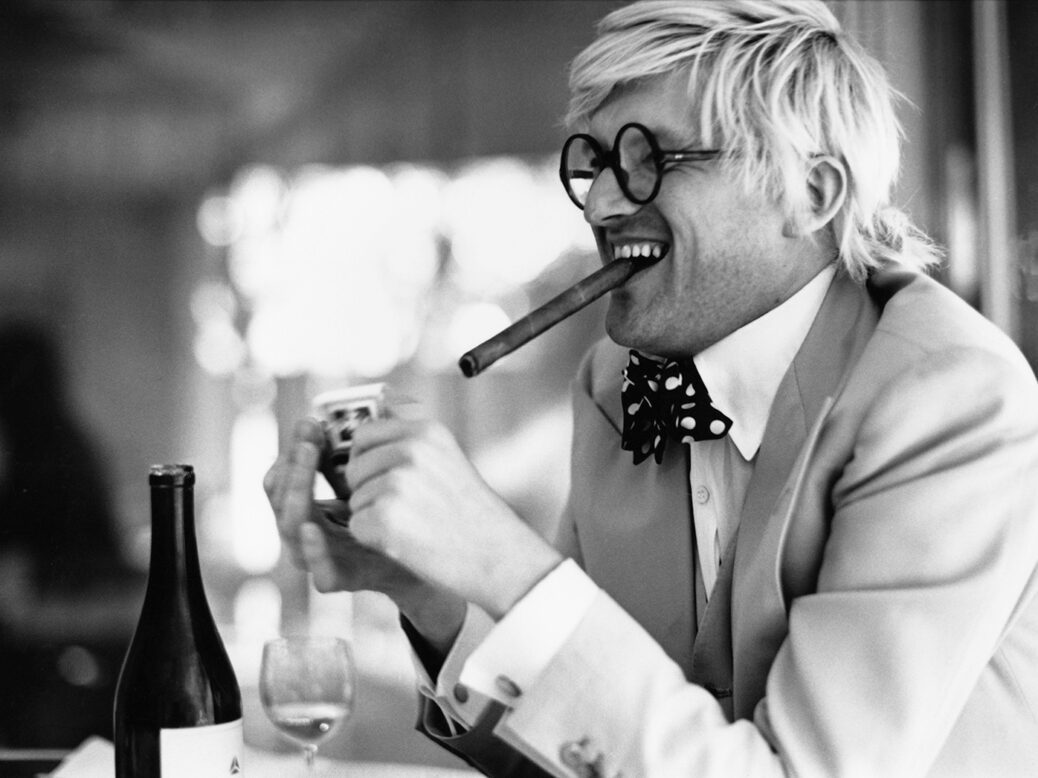
But I am in danger of making him sound forbidding. In truth, he was the most delightful of companions – kind, wise and full of fun. “Love life,” he repeated, and he brought a brightness that isn’t quite matched by any other Briton of his age. If you made a word cloud around him, it would include: Yorkshire, gay, peroxide, swimming pools, California, smoking… but a word cloud would never do.
Exquisite pencil portraits of friends; huge, brightly coloured canvases of landscapes; watercolours of Norway and Japan; opera sets; iPad works; studies of water, ageing faces, changing leaf patterns; plastic water bottles and flowers; complex photographic, collages; and simple, sexy watercolours… the dazzling array of images he brought us will never be forgotten.
For some years, the biggest treat of any week would be the “ping” from my phone and the arrival of the latest Hockney iPad drawing. Sometimes it was accompanied by a video showing how it had been made: some flowers on a windowsill; a bottle of wine or a croissant; the sun setting; light and cloud over the North Sea. They were wordless postcards saying: “Isn’t this world amazing! Isn’t it glorious to be alive?”
But he was noting everything around him long before he got his first iPad. In 2002, he painted me in his studio in an uncanny and unsettling likeness, which I could never afford to buy. He showed me cabinet after cabinet stuffed with notebooks, hundreds of beautiful, instant drawings and watercolours he made while moving around.
I was back in the same studio late last year when, surrounded by medical apparatus and attended by a nurse, he was still hard at work, encircled by recent acrylic paintings and talking 19 to the dozen about his recent reading on art theory. We discussed a score of different artists, and, at one point he sang an entire aria from The Rake’s Progress, the opera for which he had designed sets in 1975. His imagination seemedto be exploding in every direction.
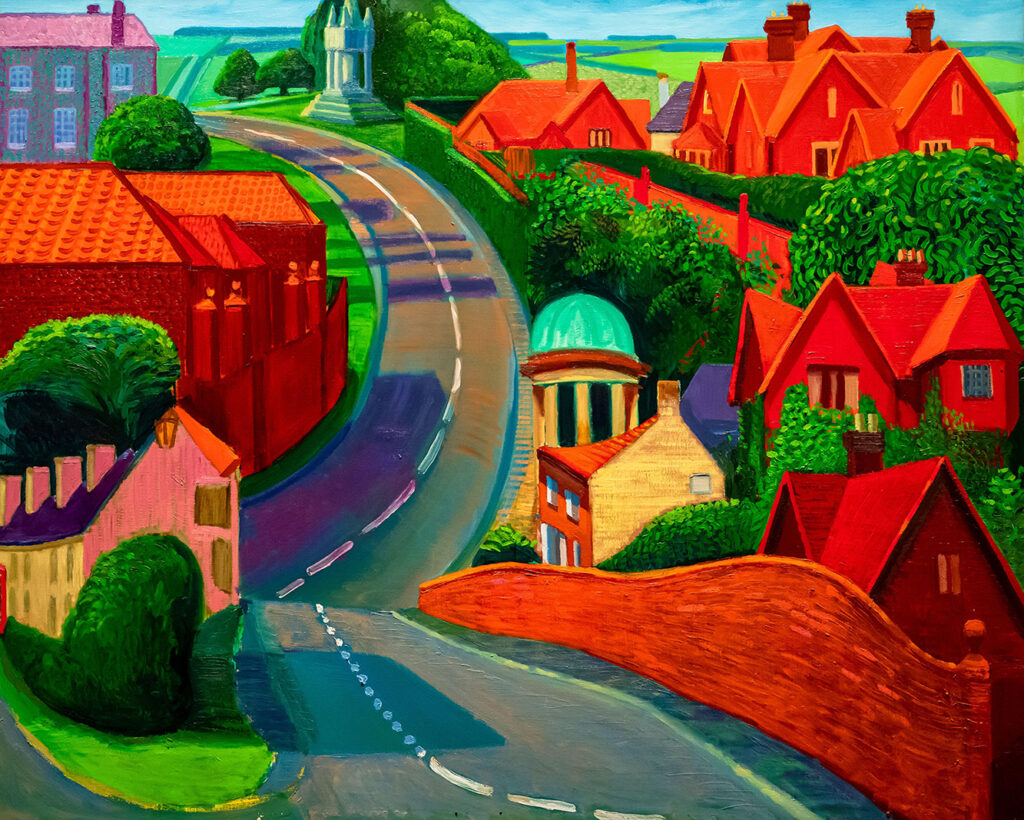
David always said that you needed three things for art: the eye, the hand and the heart. “Two are not enough.” He built a world of images which, like any great art, then changed our perceptions. Just as many people can’t see French landscapes without being unconsciously affected by Claude Monet and Paul Cézanne, so t00 are Los Angeles, Paris and the Yorkshire Wolds forever reshaped by David Hockney.
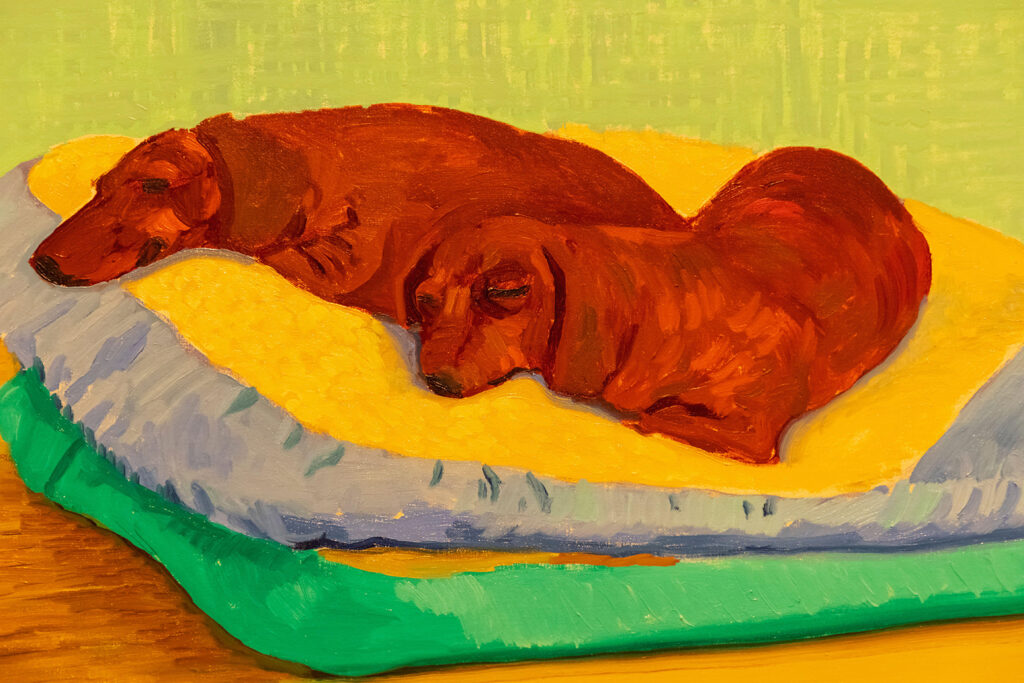
The global popularity of this learned, curious, magically talented man came from simple sources: his almost erotic visual glee in the world around him and his uncanny ability to convey it. His deep passion for the visual world will never leave it. I’m writing this in a room containing many of his many books. If the sky darkens, or I feel sad, opening them is faster, cheaper and more effective than any drug – not that he was ever a puritan on that subject.
Nor do I want to make him sound cosy. David was kind but also sharp, opinionated and highly critical of politics. “End Bossiness Soon” read badges he liked to hand out (“End Bossiness Now” would have been too bossy, he once explained). He disliked all authority. His inherent anarchism included insisting on smoking wherever he wasn’t physically prevented from doing so.
He always had something interesting to say, whether it was on some new book or author, a film he was horrified you hadn’t yet seen, or fresh – often rude – thoughts about a rising star of the art world.
Now, this swirling, explosive star has gone out. The news was a hard, winding, punch in the guts and I feel I’ve lost a friend. David loved life, and concluded one artwork about sunrise with the words: “Remember you cannot look at the sun or death for very long.”
Was he one of the great artists? It is notoriously hard to make these judgements in the moment but virtually every single major art museum in the world thinks the answer is yes. I can’t think of an artist so loved by millions today. The man is gone but the pictures live on. “Spring cannot be cancelled” was one of his more recent slogans. Nor can David Hockney.
[Further reading: David Hockney writ large]
Content from our partners

Related
This article appears in the 17 Jun 2026 issue of the New Statesman, The Race